
Rock Phagnalon
Phagnalon rupestre
Description
Growing requirements
Rock Phagnalon (Phagnalon rupestre) is a resilient perennial subshrub belonging to the Asteraceae family. It is highly valued for its ability to thrive in harsh, rocky environments where most traditional agricultural crops fail to establish.
The plant originates from the Mediterranean basin and North Africa. Its natural habitat consists of limestone cliffs, dry stony slopes, and arid mountainous regions, which has shaped its evolution into a highly specialized xerophyte.
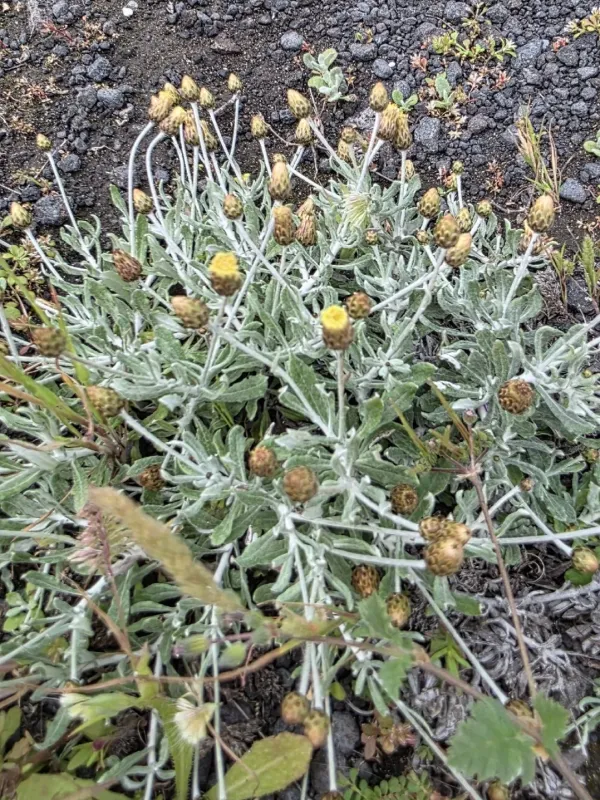
Botanically, the species is distinguished by its silvery-tomentose leaves and stems. This dense hair covering serves as an adaptive mechanism, reflecting excess solar radiation and reducing water loss through transpiration, which is crucial for survival in high-temperature zones.
Regarding soil requirements, this culture demands excellent drainage above all else. It performs optimally in shallow, alkaline, or rocky soils. Soils that retain excessive moisture are unsuitable, as they lead to root rot and systemic plant failure.
The crop is adapted to intense sunlight and seasonal aridity. In an agricultural context, it is suitable for xeriscaping and sustainable farming in regions prone to water scarcity, as it requires minimal irrigation once established.
Main diseases and pests
The primary threat to the health of Rock Phagnalon is excessive moisture. Waterlogging creates a toxic environment for the root system, inviting opportunistic fungi that can lead to rapid decay of the vascular tissues.
While the plant is quite resistant to most common pests, aphids can occasionally infest the growing tips during the spring season. Monitoring and physical removal are usually sufficient to maintain plant health without resorting to heavy pesticides.
In humid climates or during seasons of high rainfall, Botrytis blight may occur. This disease manifests as gray mold on the foliage, and it is best managed by pruning affected parts and ensuring improved airflow around the plant canopy.
Weed competition is a significant threat during the seedling and establishment phases. As a slow-growing species in its early stages, Rock Phagnalon can be easily outcompeted by aggressive weeds, necessitating careful manual clearing of the planting site.
To ensure long-term productivity, growers must avoid the application of heavy fertilizers, especially nitrogen-rich ones. Over-fertilization results in succulent, weak growth that is far more susceptible to pest attacks and frost damage.