
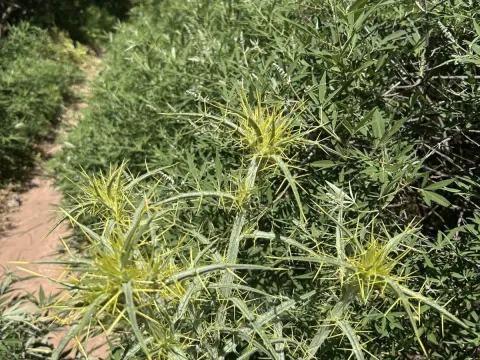
Picnomon acarna
Picnomon
Picnomon acarna is a distinct herbaceous species belonging to the Asteraceae family. Known for its prickly appearance and resilient nature, this plant is a characteristic element of the Mediterranean landscape, often thriving in habitats where other vegetation struggles to survive.
What the section contains

Picnomon acarna
The origin of the species is linked to the Mediterranean basin, spanning from Southern Europe to parts of Western Asia. It typically occupies open, sunny environments such as dry grasslands, rocky slopes, and abandoned fields, showing a remarkable tolerance to drought and thermal stress.
Soil requirements for Picnomon acarna are relatively simple: it demands excellent drainage and prefers limestone-based or sandy soils. Waterlogged conditions are detrimental to the root system, often resulting in rapid decay, which limits its distribution to well-aerated substrates.
Botanically, the plant is recognized by its rigid, spiny leaves and stems that provide significant protection against herbivory. The flower heads are composed of tubular florets, typically pink or purple in color, which are highly efficient at attracting pollinators like bees and butterflies during the flowering season.
Agricultural management of this species involves maintaining high exposure to sunlight and avoiding excessive soil moisture. As a hardy plant, it does not necessitate intensive fertilization and is better suited for low-input environments where its ability to scavenge nutrients from poor soil is a primary advantage.
The primary pathological threats to Picnomon acarna involve fungal infections, particularly those triggered by high atmospheric humidity and poor air circulation. Symptoms often manifest as necrotic spots on the foliage or white powdery coatings, which can weaken the structural integrity of the plant.
Pest issues include sap-sucking insects like aphids, which tend to congregate on the tender parts of the plant, and root-boring larvae that can cause sudden wilting. Managing these threats requires integrated pest management (IPM) strategies, given the logistical difficulty of handling the plant's sharp spines.