
Peucephyllum
Peucephyllum
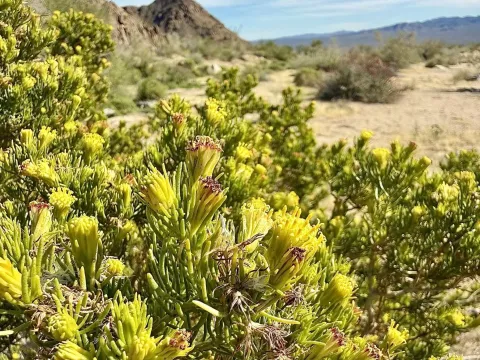
Peucephyllum, specifically Peucephyllum schottii, is a perennial shrub belonging to the Asteraceae family, well-adapted to harsh desert environments.
What the section contains

Peucephyllum
Propagation is primarily conducted through seeds, which should be planted in a loose, well-draining sandy substrate to mimic the natural soil composition of its native habitat.
Sowing should take place when temperatures consistently remain above 20 degrees Celsius, as warm soil is critical for successful germination of the seeds.
Once seedlings emerge, they must be kept in a well-lit area with restricted irrigation to prevent the development of damping-off diseases common in humid conditions.
When the plants reach the appropriate size, they are transplanted into open fields, ensuring that the root ball remains intact to facilitate quick establishment.
The plant originates from the arid deserts of the Southwestern United States and Northwestern Mexico, thriving in rocky canyons and mountainous slopes.
Key environmental requirements include full sunlight exposure and soils with high gravel or sand content, ensuring rapid drainage after infrequent rainfall.
Peucephyllum is highly drought-tolerant, exhibiting physiological adaptations that allow it to survive in regions with extremely low water availability.
It prefers alkaline or neutral soil pH levels and does not tolerate waterlogged conditions, which can be fatal to its specific root system structure.
This species is highly valued in xeriscaping and ecological restoration projects for its ability to maintain stability in arid, erosion-prone landscapes.
Peucephyllum generally shows strong resistance to major agricultural pests due to the high density of resinous compounds found throughout the plant tissues.
The primary concern for growers is the development of root rot, which typically occurs if the soil drainage is inadequate or if humidity levels remain high.
Maintaining proper spacing between plants is essential to ensure adequate airflow and sunlight penetration, which helps reduce the risk of pathogenic infections.
While specific insect infestations are rare, monitoring for common greenhouse pests is advisable if the plant is grown under controlled, non-natural conditions.
Cultural control, such as strict irrigation management, remains the most effective method for managing potential threats to the plant's health.