
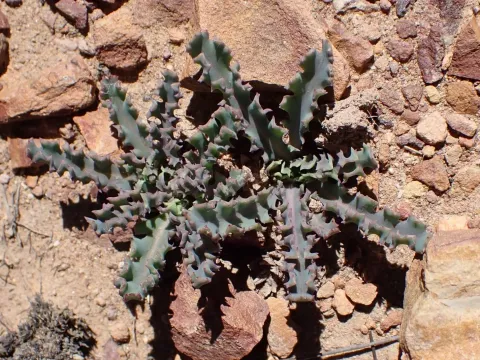
Othonna auriculifolia
Othonna auriculifolia
Sowing Othonna auriculifolia seeds is best performed in early spring as daylight hours begin to increase. Maintaining a constant temperature range of 18–22 degrees Celsius is crucial for germination success.
What the section contains
Othonna auriculifolia
Use a well-draining, sandy-based substrate for the best results. Seeds should be surface-sown and lightly pressed into the soil to ensure proper contact without burial, as light promotes germination.
Covering the containers with transparent plastic or glass will help maintain consistent humidity levels during the initial growth phase. Daily ventilation is mandatory to ensure fresh air circulation.
Seedlings typically emerge within 2 to 4 weeks. Once the first pair of true leaves is established, the cover can be gradually removed to allow the young plants to acclimate to ambient conditions.
Transplanting into individual pots should occur once the root system is robust enough to handle the stress of repotting. Always choose containers with sufficient drainage to prevent long-term moisture issues.
Othonna auriculifolia belongs to the Asteraceae family and is a succulent species native to the arid regions of Southern Africa. It is highly specialized for life in harsh, dry environments.
Bright, direct sunlight is a primary requirement for this species. Without sufficient light, the plant will become leggy and lose its natural, dense growth form, making it look unhealthy and weak.
The soil must be exceptionally porous and drain rapidly. A mix of pumice, coarse sand, and a small amount of potting soil is ideal for simulating its natural rocky habitat and preventing root rot.
During the active growing season, water thoroughly only when the substrate has completely dried out. In the winter rest period, watering should be reduced to an absolute minimum to prevent dormancy stress.
The plant thrives with clear day-to-night temperature fluctuations. These changes are essential for the metabolic processes that keep the plant resilient and prevent premature blooming or etiolation.
The most common threat to Othonna auriculifolia is root rot triggered by waterlogged conditions. High humidity combined with poor airflow often leads to fungal infections that can kill the plant quickly.
Spider mites are the most persistent pest for this species, especially in environments with low air circulation. They feed on plant sap, causing yellowing and stippling of the succulent leaves.
Mealybugs can also infest the plant, hiding in the junctions between leaves and stems. Regular inspections and the use of appropriate contact or systemic insecticides can prevent significant damage.
Proper air ventilation is the best defense against pathogens. Avoiding overcrowding of plants in a greenhouse or window sill setting significantly reduces the risk of pest and disease outbreaks.
If decay or soft spots are detected, affected parts must be removed with a sterile blade immediately. Ensuring the remaining tissue is dry is the best way to stop the spread of infection.