
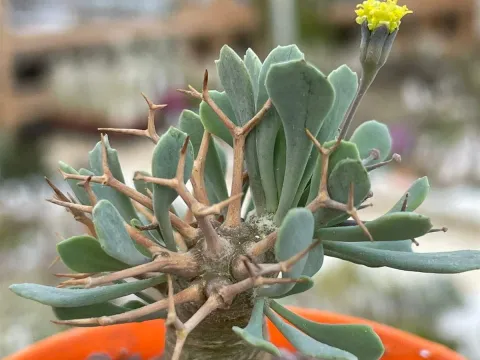
Othonna euphorbioides
Othonna euphorbioides
Othonna euphorbioides is a distinct caudex-forming succulent species belonging to the Asteraceae family. Native to the arid regions of Southern Africa, particularly Namibia and the Cape, this plant is highly prized by collectors for its sculptural, succulent stem structure.
What the section contains
Othonna euphorbioides
The botanical highlight of this species is its thick, irregular caudex, which acts as a survival mechanism against the harsh desert climate. Its stems are covered in warty protuberances, which provide a striking appearance that mimics the morphology of various Euphorbia species, despite the lack of genetic relation.
For successful cultivation, the plant requires a highly porous and inorganic potting medium. A blend of pumice, coarse grit, and a small fraction of organic material ensures that water passes through quickly, preventing the root suffocation that often leads to plant loss.
The environmental requirements include a high-light environment with excellent airflow. While Othonna euphorbioides enjoys bright light, it is essential to avoid intense, direct afternoon heat, which can damage the plant's skin, especially in greenhouse conditions.
Growth cycles are distinct: the plant actively grows during the cooler months and enters a dormant phase during the peak of the summer heat. Adjusting watering frequency according to these seasons is vital to replicate the plant's natural habitat cycle and prevent dormancy-related issues.
The most common threat to this species is root rot caused by improper watering, particularly if the substrate remains wet during the plant's dormancy phase. Maintaining a strictly dry winter environment is essential for the health of the caudex.
Pests such as mealybugs, which hide in the crevices of the warty stems, are the primary biological concern. Regular inspections and early intervention with mild insecticidal soaps or systemic treatments are recommended to maintain plant health.