
Othonna capensis
Othonna capensis
Description
Growing requirements
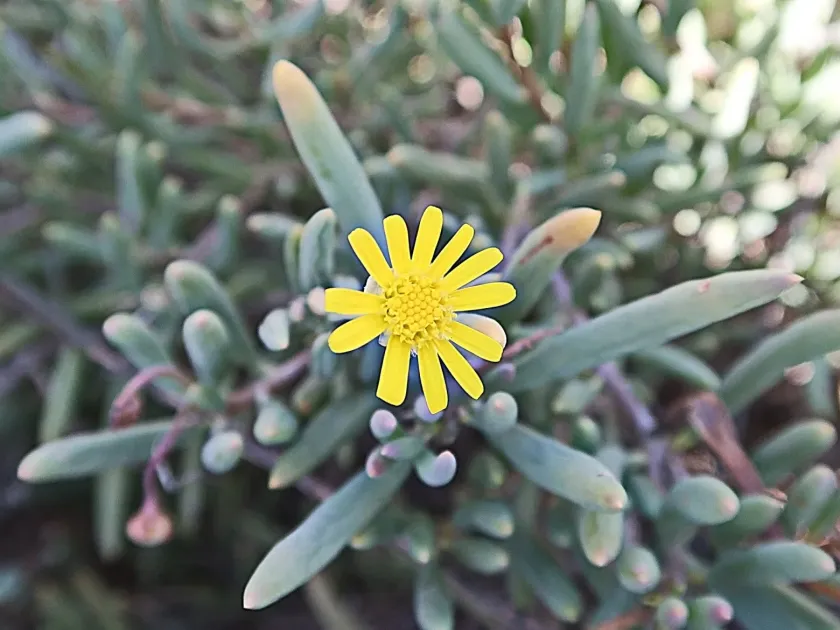
Othonna capensis, widely known as the Little Pickles plant, belongs to the Asteraceae family. Originating from the semi-arid regions of Southern Africa, it has evolved as a succulent plant capable of thriving in harsh, moisture-deprived environments with minimal organic matter.
The botanical structure consists of trailing, slender stems with fleshy, cylindrical leaves that often display a distinctive reddish hue under high light intensity. It produces small, vibrant yellow daisy-like flowers, which contribute to its popularity as an ornamental agricultural crop in horticultural trade.
Agricultural success depends on providing a well-draining, gritty soil mix. Because the plant stores water in its leaves, it is highly susceptible to root rot if the growing medium remains consistently wet. The soil must allow for rapid drainage to mimic the plant's natural arid habitat.
Environmental requirements prioritize high light exposure. In an indoor or greenhouse setting, it thrives best in direct sunlight or bright indirect light. Insufficient light results in etiolation, where the plant grows weak, elongated stems, significantly reducing its ornamental value and health.
Standard cultivation practices require a seasonal watering schedule: regular watering during the active growth phase and a dormancy period in winter where water is severely restricted. Propagation is efficiently achieved through stem cuttings, which root easily in moist sandy substrates during the warmer months.
Main diseases and pests
Common pests affecting this species include mealybugs and spider mites, which can rapidly infest the dense clusters of leaves. Regular inspection of the plant's foliage, especially in hidden crevices, is necessary to prevent these pests from spreading throughout the entire crop.
The primary threat is fungal infection, specifically stem and root rot caused by poor soil drainage and excessive humidity. When cultivating this plant, ensuring airflow around the foliage and proper drying of the substrate are the most effective preventative measures against pathogen development.