
Othonna cacalioides
Othonna cacalioides
Description
Growing requirements
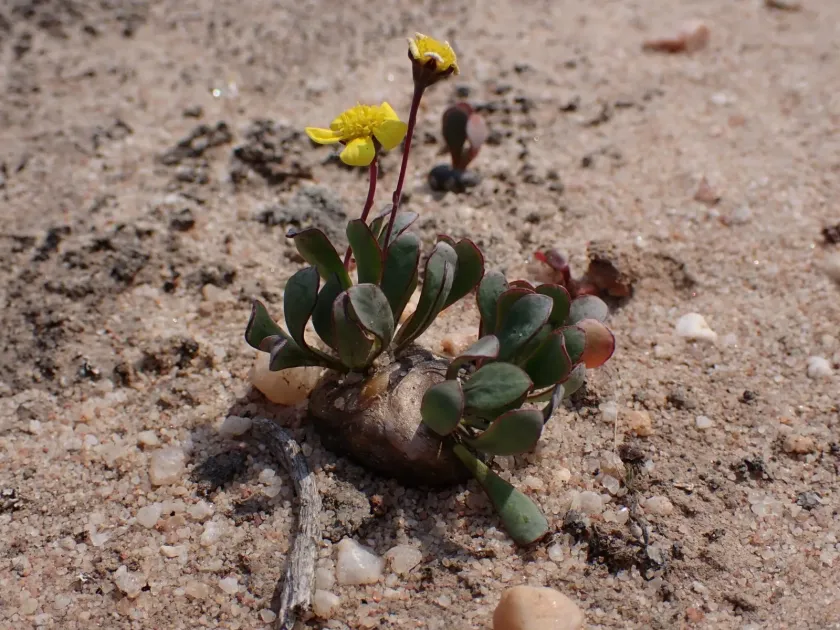
Othonna cacalioides is a distinct member of the Asteraceae family, recognized for its specialized caudex that functions as a water storage organ. Native to the arid, rocky terrains of South Africa's Cape Province, it has evolved to thrive in environments with minimal rainfall.
The plant features a compact, swollen stem crowned with thick, bluish-green leaves. Its slow growth rate and unique form make it a prized specimen for collectors of arid-climate flora, though it requires precise cultural conditions to mimic its natural habitat.
Optimal cultivation requires maximum sun exposure and a well-ventilated environment. During the growing season, which generally follows the cooler winter months in its natural range, the plant requires consistent but moderate light to maintain its compact growth habit.
The substrate must be highly porous and inorganic. A mix composed of pumice, coarse sand, and a small fraction of organic material is recommended to ensure rapid drainage, preventing any water accumulation around the delicate root system or the base of the caudex.
Watering practices must be strictly seasonal. One should provide water only when the plant shows signs of active growth and the soil medium is entirely dry. In contrast, during the dormant period in the hot summer, the plant should remain almost completely dry.
Main diseases and pests
The primary threat to Othonna cacalioides is root rot caused by stagnant moisture. Because the plant is physiologically adapted to withstand drought, any tendency to overwater during dormant periods is the most common cause of mortality in cultivation.
Pests, particularly mealybugs, are frequent offenders. They tend to hide in the dense leaf clusters, making manual removal difficult. Integrated pest management using systemic pesticides is often necessary to control these infestations before they spread.
Fungal pathogens can colonize the plant if humidity levels are too high combined with poor air circulation. It is essential to ensure the plant is never placed in a stagnant environment, as this promotes the proliferation of pathogenic micro-organisms.
Mechanical damage to the succulent leaves or the caudex provides entry points for infections. Careful handling during repotting is necessary to maintain the integrity of the plant's surface tissues.
Regular surveillance for signs of stress, such as yellowing leaves or softening of the caudex, is vital for early intervention. Prompt removal of infected parts and adjustment of the environment can often save the specimen from total loss.