
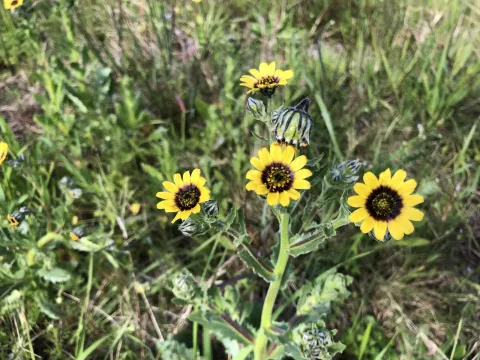
Osteospermum monstrosum
Osteospermum monstrosum
Osteospermum monstrosum is a unique member of the Asteraceae family often grown for its aesthetic appeal. Propagation is primarily achieved through seeds, which should be started indoors in late winter to early spring.
What the section contains
Osteospermum monstrosum
Use a sterile, well-draining seed starting mix. Seeds should be lightly covered with soil and kept at a temperature of approximately 20–22 degrees Celsius to ensure uniform germination.
Once seedlings have developed two sets of true leaves, they should be transplanted into individual containers. This process encourages a strong root system essential for later transplanting.
Hardening off the seedlings is a crucial step before moving them outside. Gradually exposing plants to outdoor conditions over two weeks helps them adapt to temperature fluctuations.
Planting in the garden should only occur once all danger of frost has passed, ensuring that plants are spaced adequately to promote healthy airflow and vigorous growth.
This species thrives in full sun exposure. It requires at least six to eight hours of direct sunlight daily to produce high-quality blooms and maintain a compact growth habit.
The ideal soil is sandy, nutrient-rich, and possess excellent drainage capabilities. Heavy clay soils should be amended with organic matter and grit to prevent waterlogging.
Watering should be balanced; while the plant is somewhat drought-tolerant once established, consistent moisture is necessary during the active flowering phase to support constant bud production.
Regular fertilization with a balanced, water-soluble fertilizer applied every two weeks throughout the growing season will significantly enhance the overall plant health and bloom count.
Mulching around the base of the plant can help regulate soil temperature and retain moisture, although care must be taken to keep the crown of the plant dry to avoid rot.
Fungal issues, particularly powdery mildew and root rot, represent the primary threats to this crop. These are usually exacerbated by poor ventilation and high humidity levels.
Aphids are the most common insect pests that attack the soft terminal shoots and buds, causing stunted growth and misshapen leaves if left uncontrolled.
Spidermites may also infest plants during hot and dry spells. Monitoring the undersides of leaves for signs of webbing is essential for early detection and intervention.
Integrated pest management strategies, such as using insecticidal soaps or neem oil, are recommended for controlling minor infestations without harming the local environment.
Maintaining proper hygiene by removing dead foliage and weeds around the plants helps to minimize the pressure from various pathogens and pests during the season.