
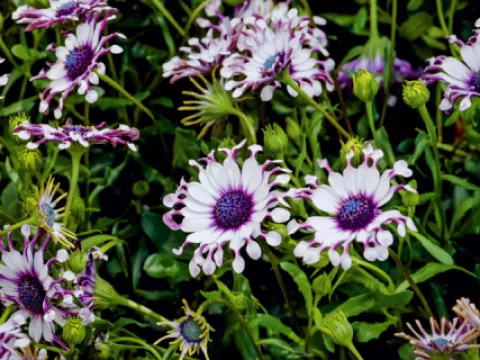
Osteospermum hybrids
Osteospermum hybrids
Sowing Osteospermum hybrids is typically performed indoors between late winter and early spring. Seeds should be sown in a high-quality, sterile seed-starting mix to ensure successful germination.
What the section contains
Osteospermum hybrids
Maintain an ambient temperature of approximately 20 to 22 degrees Celsius to stimulate uniform seedling emergence. Proper light exposure is critical immediately after germination to prevent etiolation.
Seedlings should be transplanted into individual pots once they develop their first set of true leaves. Gentle hardening off is essential before transplanting into outdoor beds once the frost risk has passed.
The spacing between plants should be managed carefully to ensure adequate air circulation. Typically, a distance of 30 to 45 centimeters is recommended to promote healthy branching and flower production.
Direct sowing into the garden is only feasible in climates with long, warm growing seasons. In most regions, starting plants as transplants is the preferred agronomic method.
As a member of the Asteraceae family, Osteospermum thrives in full sun exposure. It requires at least six to eight hours of direct sunlight daily to produce high-quality, vibrant blossoms.
The soil must be well-draining, as the root system is highly sensitive to waterlogging. Incorporating organic matter into the substrate helps maintain the optimal balance of moisture and aeration.
While the plant is somewhat drought-tolerant once established, consistent soil moisture is required for maximum blooming performance. Avoid extreme soil dryness, but never let the roots sit in standing water.
Regular fertilization with a balanced, water-soluble fertilizer is recommended throughout the active growing season. Lower nitrogen levels are preferred to prioritize floral development over excessive foliage.
Deadheading faded blooms is an important practice that encourages the plant to direct energy toward new bud formation rather than seed production, extending the flowering period significantly.
Root rot is the most significant threat to Osteospermum hybrids, usually resulting from poor drainage or excessive irrigation. Ensuring a proper substrate structure is the primary line of defense.
Powdery mildew can manifest as a white, powdery fungal growth on leaves during periods of high humidity and poor ventilation. Proper spacing between plants significantly reduces this risk.
Aphids are common pests that infest terminal shoots and flower buds, weakening the plant. Monitoring and immediate treatment with insecticidal soaps can prevent widespread infestation.
Spider mites may affect the plant during hot, dry weather conditions. They feed on the sap of the leaves, causing stippling and eventual leaf drop if not managed correctly.
Whiteflies are another potential nuisance in greenhouse or garden settings. Integrated pest management, including regular inspection and the use of targeted treatments, is advised to keep the culture healthy.