
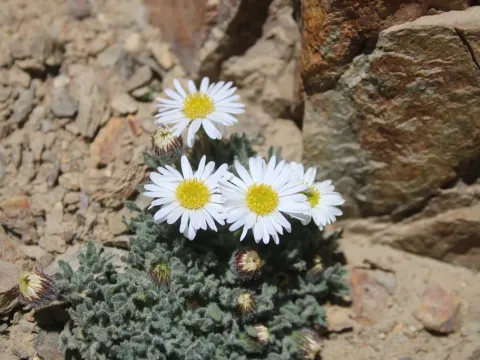
Fleabane
Erigeron L.
Fleabane (genus Erigeron) is a member of the Asteraceae family. Sowing is generally conducted either in early spring as a seedling or directly into prepared garden beds once the threat of frost has passed.
What the section contains
 Annual fleabane
Erigeron annuus (L.) Pers.
Annual fleabane
Erigeron annuus (L.) Pers.
 Argentine fleabane
Erigeron bonariensis L.
Argentine fleabane
Erigeron bonariensis L.
 Aspen fleabane
Erigeron speciosus (Lindl.) DC.
Aspen fleabane
Erigeron speciosus (Lindl.) DC.
 Erigeron breviscapus
 (Vaniot) Hand.-Mazz.
Erigeron breviscapus
Erigeron breviscapus (Vaniot) Hand.-Mazz.
 Erigeron karvinskianus
 DC.
Erigeron karvinskianus
Erigeron karvinskianus DC.
 Hybrid fleabane
hybrids between Erigeron karvinskianus DC. and Erigeron speciosus (Lindl.) DC.
Hybrid fleabane
hybrids between Erigeron karvinskianus DC. and Erigeron speciosus (Lindl.) DC.
 Mat daisy
Erigeron caespitosus Nutt.
Mat daisy
Erigeron caespitosus Nutt.
 Seaside daisy
Erigeron glaucus Ker-Gawl.
Seaside daisy
Erigeron glaucus Ker-Gawl.
Fleabane
Seeds are tiny and require light for germination; therefore, they should not be covered with a thick layer of soil. Pressing them lightly into the surface of a fine-textured substrate is ideal for ensuring successful emergence.
When starting indoors, use seed trays filled with a light potting mix. Maintain a constant temperature of about 18–20°C and ensure high humidity during the first few days of germination.
Seedlings are ready for transplanting once they develop two sets of true leaves. When direct-seeding, ensure spacing is sufficient to prevent overcrowding, which can inhibit development.
Once established, the plants may self-seed if conditions are favorable, which helps in maintaining density in naturalized plantings or border designs.
Fleabane thrives in full sun exposure. While some species tolerate partial shade, maximum flowering intensity is achieved only when the plants receive at least six hours of direct sunlight daily.
The soil must be well-drained and relatively lean. Heavy, waterlogged soils are detrimental to the roots, often leading to rapid decline or fungal infections in the plant crown.
These plants are moderately drought-tolerant but perform best with consistent moisture throughout the growing season. A drip irrigation system is recommended for efficient water management.
Low to moderate fertilization is required. Excessive nitrogen applications should be avoided as they promote lush vegetative growth at the expense of flower production.
The plant is highly adaptable to various climatic zones and is known for its hardiness, surviving cold winters in many temperate regions without the need for additional protection.
Powdery mildew is the most common threat, often appearing during spells of high humidity or poor air circulation. Proper spacing of plants remains the primary cultural control method.
Root rot is typically observed in areas with poor drainage. Once roots are compromised, the plant often wilts suddenly and may not recover, necessitating the removal of the affected individual.
Common insect pests include aphids and mites, which feed on the sap of tender leaves. Infestations can weaken the plant and reduce its aesthetic value significantly.
Implementing an Integrated Pest Management (IPM) approach, including the use of soaps or systemic insecticides when necessary, helps maintain plant health throughout the summer.
Regular monitoring for symptoms of disease or pest activity is essential for early intervention, ensuring that the health of the entire plant population is preserved.