
Annual fleabane
Erigeron annuus (L.) Pers.
Description
Growing requirements
Annual fleabane (Erigeron annuus) is a herbaceous plant belonging to the Asteraceae family. Originally native to North America, it has become naturalized across many regions of the world, adapting to various temperate climates and soil conditions.
The plant thrives in well-lit areas, frequently colonizing disturbed ground, pastures, and cultivated fields. Its ability to tolerate different light intensities makes it a highly resilient species in changing agricultural landscapes.
Regarding soil, E. annuus is quite versatile, showing tolerance for both nutrient-poor and fertile soils. It prefers moisture-retentive soils but maintains metabolic activity even during moderate dry spells due to its robust root system.
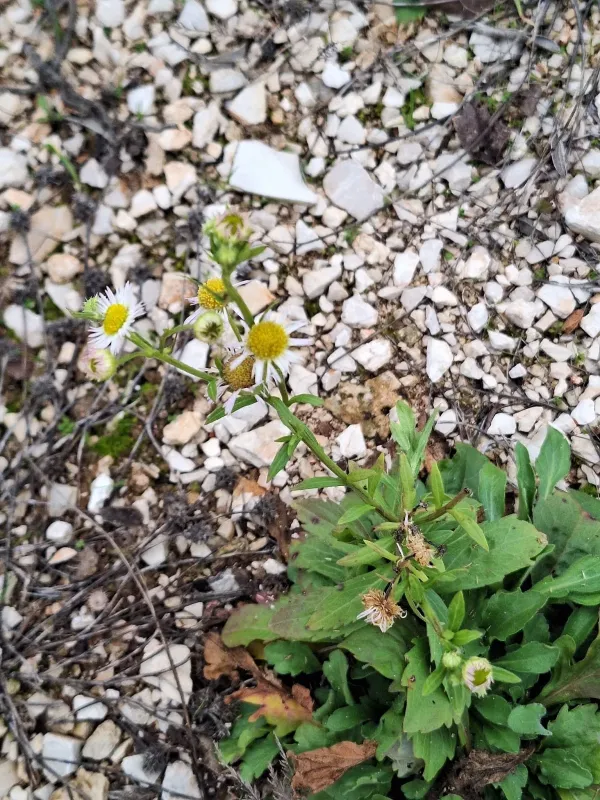
Botanically, it features a sturdy, branching stem that can grow up to one meter in height. The foliage is characteristically hirsute, and the plant produces a large number of white to light lavender flower heads throughout the summer season.
The reproductive strategy is highly efficient, utilizing wind-dispersed seeds to colonize new territories. Its phenology suggests a rapid growth cycle, which allows it to outcompete slower-developing species in early spring conditions.
Main diseases and pests
In the agricultural sector, annual fleabane is often perceived as a troublesome weed. It competes aggressively with crops for essential resources, often reducing yields in cereal crops and pasture lands if not managed effectively.
The main challenge in controlling this plant is its seed bank longevity. A single mature plant can produce thousands of seeds, requiring multi-year management strategies to deplete the soil seed bank in infested areas.
Disease pressures for the plant include various powdery mildew species, which can appear under high-humidity conditions. While the plant is hardy, these fungi can potentially affect neighboring desirable plant species.
Pest issues are mainly related to aphids and mirid bugs that utilize the plant as a host. These insects can subsequently transfer viruses or cause direct damage to adjacent crops, necessitating integrated pest management approaches.
Effective management includes mechanical weeding, such as shallow tillage, and the strategic application of herbicides. Crop rotation remains one of the most effective methods to limit the proliferation of this species in cultivated fields.