
Mat daisy
Erigeron caespitosus Nutt.
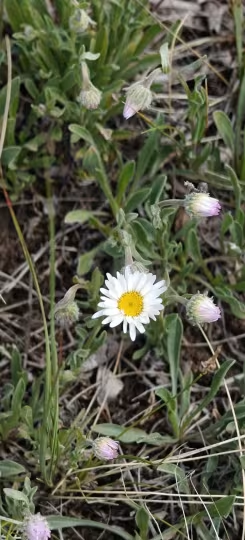
Description
Sowing dates
Sowing of Erigeron caespitosus seeds is best performed in early spring or late autumn, allowing for a natural stratification process if sown outdoors.
When starting indoors, seeds should be sown in a well-drained, sterile potting mix during late winter, typically February to March, to ensure a strong start.
Light is essential for the germination of these seeds; therefore, they should be surface-sown and only very lightly covered with a thin layer of horticultural grit.
The germination period usually lasts between two to three weeks, during which consistent soil moisture must be maintained without allowing the substrate to become waterlogged.
Seedlings are ready for transplanting once they develop several true leaves, and they should be gradually acclimated to outdoor conditions before being planted in the rock garden.
Growing requirements
Erigeron caespitosus, commonly known as the mat daisy, is a perennial member of the Asteraceae family, native to the rocky landscapes of North America.
The plant thrives in gritty, sandy, or rocky soils with excellent drainage, as it is highly adapted to the thin soils found on mountain slopes and plains.
As a sun-loving species, it requires full exposure to solar radiation to maintain its compact, matted growth habit and to promote abundant flowering throughout the summer.
It is exceptionally drought-tolerant once established, requiring minimal supplemental irrigation, which makes it an excellent choice for low-maintenance xeriscaping.
The plant demonstrates superior hardiness, capable of withstanding significant temperature drops, making it a reliable perennial for colder climates and high-altitude gardening.
Main diseases and pests
The primary concern for Erigeron caespitosus is root rot, which is almost invariably caused by poor drainage or excessive soil moisture during the dormant winter months.
Powdery mildew can become an issue in environments with poor air circulation or high humidity, necessitating the use of fungicides or improved spacing between plants.
Aphids and spider mites are common pests that may infest the foliage during hot, dry summer periods, weakening the plant if left untreated for long durations.
Nematodes are another potential threat, which can lead to stunted growth and yellowing of the foliage, often requiring specialized soil treatment or plant removal.
- Ensure perfect soil drainage
- Provide full sun exposure
- Monitor for pest outbreaks
- Remove dead leaves in spring