
Erigeron breviscapus
Erigeron breviscapus (Vaniot) Hand.-Mazz.
Description
Sowing dates
Erigeron breviscapus is a perennial herb of the Asteraceae family, widely cultivated for its medicinal properties, particularly for its high content of scutellarin. It is typically propagated by seeds, which can be sown in greenhouses or direct-seeded into prepared nursery beds.
The optimal time for sowing is spring, once soil temperatures are consistently above 12 degrees Celsius. Using high-quality seeds with good germination rates is essential for establishing a uniform crop stand.
When transplanting seedlings, a spacing of 30-40 cm between rows is recommended. This allows for adequate air circulation and simplifies maintenance tasks such as hoeing and weeding during the initial development phase.
Early-stage growth is relatively slow, requiring careful management of competitive weeds. Maintaining a density of approximately 8 to 10 plants per square meter provides a balance between yield per area and individual plant health.
The plant has strong regenerative capabilities, and in some climates, it can spread vegetatively, which can be leveraged for propagation by dividing older root clumps in early spring.
Growing requirements
The crop thrives in light, well-draining, and fertile soils with a pH ranging from slightly acidic to neutral. Heavy, waterlogged soils must be avoided as they significantly increase the risk of root pathogens.
Sunlight exposure is crucial for the biosynthesis of secondary metabolites within the leaves and flowers. Sites with full sun exposure are preferred, while excessive shading may lead to thinner foliage and lower medicinal concentrations.
Fertilization should prioritize the incorporation of compost or well-rotted manure during the pre-planting soil preparation stage. Supplemental phosphorous and potassium applications can boost floral development and overall crop hardiness.
While mature plants have a moderate tolerance to drought, consistent moisture during the vegetative growth phase is essential for maximizing biomass. Drip irrigation is the most efficient method for maintaining consistent soil moisture levels.
Effective drainage is perhaps the most critical soil requirement; therefore, planting on raised beds is highly recommended in areas prone to seasonal rainfall excess.
Yield
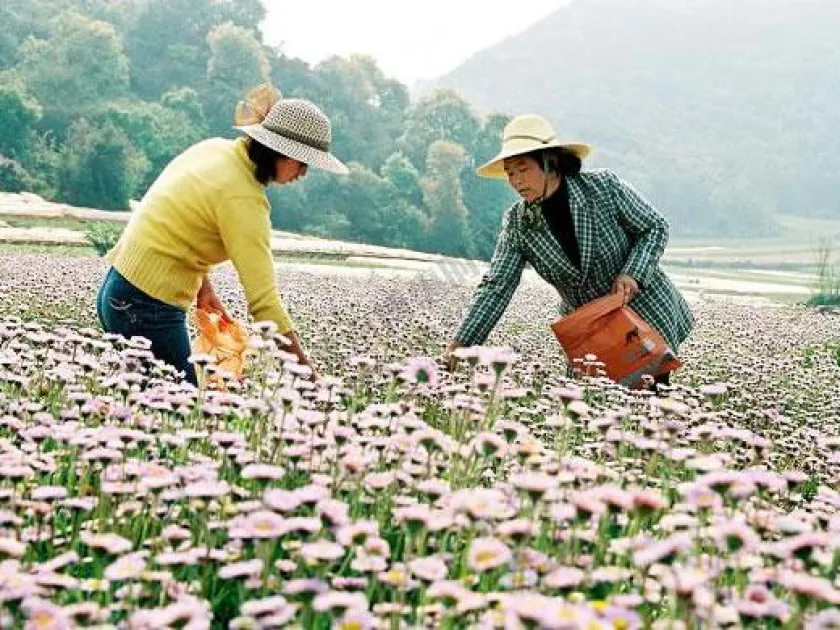
The primary harvestable product is the aerial portion of the plant, consisting of stems, leaves, and flowers. Yields are maximized by timing the harvest to coincide with the peak flowering stage, when active compounds are highest.
In a well-managed commercial plantation, Erigeron breviscapus can produce multiple harvests across 3 to 4 years before the yield begins to decline. Regular monitoring of biomass production helps in deciding when to rotate the crop.
Harvesting is performed by mowing or hand-cutting the stems, ensuring that the basal rosette remains undamaged. This promotes faster regrowth and ensures the viability of the plantation for future seasons.
Post-harvest handling must be rapid to minimize the loss of volatile compounds and to prevent fermentation. Fresh biomass should be kept in a cool place before being transferred to drying facilities.
The economic success of the crop relies on high-quality drying, which preserves the green color of the leaves and the structural integrity of the flowers, ensuring they meet pharmaceutical standards.
Main diseases and pests
The most common disease impacting Erigeron breviscapus is powdery mildew, particularly in humid or stagnant air conditions. Improving plant spacing and air circulation are the primary non-chemical control measures.
Root rot caused by fungal pathogens often occurs in poorly drained soils. Maintaining proper water management and using a robust crop rotation plan helps prevent the build-up of soil-borne pathogens over time.
Aphids and spider mites are potential pests, especially in hot, dry weather. Biological control methods, such as introducing beneficial insects, are preferred over broad-spectrum pesticides to keep the medicinal product clean and safe.
Regular surveillance of the crop allows for early detection of pest and disease outbreaks. Prompt removal of infected plant parts can effectively isolate local infestations.
A rigorous rotation cycle, not returning to the same plot for at least four years, is essential for keeping the field free from persistent fungal diseases that often affect Asteraceae crops.
Harvesting
Harvesting should ideally be conducted on dry, sunny days. This ensures that the raw material is free of dew, reducing the risk of mold growth during the initial stages of processing.
Mechanical harvesting equipment should be calibrated to cut at the correct height, protecting the central root crown. This is critical for ensuring the longevity of the plant stand and its productivity in subsequent years.
The harvested plant material should be dried in thin layers at temperatures between 40 and 45 degrees Celsius. Exceeding this temperature range can lead to the degradation of the active medicinal constituents.
Once dried, the crop must be carefully graded and cleaned to remove any soil particles, debris, or weeds. High-quality sorting is essential for achieving premium pricing in the herbal marketplace.
Final storage must occur in climate-controlled environments that are dry and dark. Proper packaging in breathable but moisture-proof containers prevents degradation of the herbs during the storage period.