
Flaveria trinervia
Flaveria trinervia
Description
Sowing dates
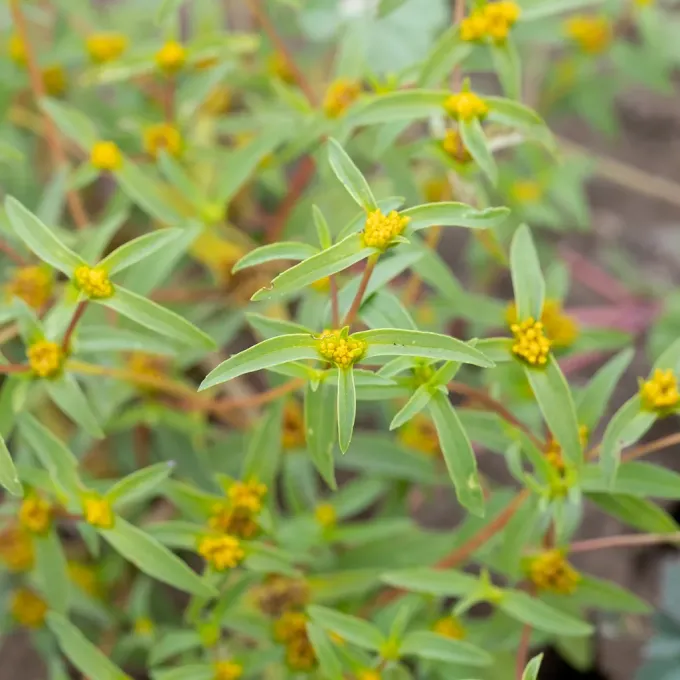
Flaveria trinervia is an annual herbaceous plant belonging to the Asteraceae family, recognized for its rapid growth cycle and physiological efficiency.
Sowing should ideally occur in the spring when soil temperatures reach stable levels, ensuring rapid germination of the small seeds.
The seeds are typically planted at a shallow depth, usually not exceeding 1-2 cm, to ensure that light exposure triggers the germination process effectively.
Once established, the seedlings develop rapidly, requiring consistent light availability to support their intense metabolic activity throughout the growth phase.
Proper spacing during the sowing process is essential to prevent overcrowding, which can hinder the plant's development and reduce overall yield.
Growing requirements
As a notable C4 plant, Flaveria trinervia exhibits high photosynthetic efficiency, making it well-adapted to high-light and high-temperature environments.
The crop prefers well-drained, fertile soil, although it shows remarkable flexibility across various soil types, including those with slightly elevated salinity levels.
Water requirements are moderate, though consistent moisture is preferred during the vegetative phase to maximize biomass production and leaf expansion.
Optimal growth occurs at temperatures ranging between 25°C and 35°C, as the plant's specialized metabolism is optimized for warm-climate conditions.
Exposure to full sunlight is crucial for this species, as it directly impacts the carbon assimilation rates that characterize its C4 photosynthetic pathway.
Main diseases and pests
Fungal infections of the root system represent a significant threat to the crop, particularly in environments with poor drainage or excessive humidity.
Insect pests, including various aphids and leaf-feeding larvae, can cause substantial damage to foliage, thereby reducing the photosynthetic area.
Powdery mildew can be a recurring issue under conditions of stagnant air and high humidity, necessitating proper ventilation and crop monitoring.
Weed competition in the early stages of growth poses a risk to the establishment of the crop, as the plant requires unrestricted access to light and nutrients.
Integrated pest management strategies are recommended to mitigate these risks and ensure healthy crop development throughout the entire season.