
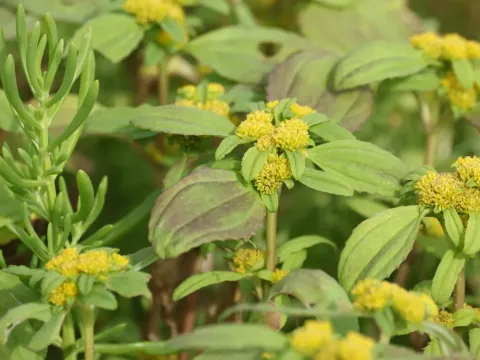
Flaveria
Flaveria
Flaveria is a genus within the Asteraceae family, typically consisting of heat-loving species that thrive in warm climates. Successful sowing requires stabilized warm soil temperatures, making late spring the ideal time for planting in most temperate regions.
What the section contains

Flaveria
The seeds are small and should be sown near the surface, as deep burial significantly hinders germination. Ensuring proper spacing is essential to prevent overcrowding and to allow each plant to receive sufficient sunlight, which is critical for its C4 photosynthetic pathway.
In regions with shorter growing seasons, starting plants indoors and transplanting them after the last frost is recommended. This approach maximizes the growing season and ensures the plants reach maturity before the onset of cooler weather.
Seedbed preparation should focus on creating a fine, well-aerated soil structure. Incorporating organic matter helps maintain moisture while ensuring adequate drainage, which is a vital factor for the healthy establishment of seedlings.
Consistent moisture is required during the germination phase. Once the plants are established, they show remarkable resilience; however, a regular watering schedule in the first few weeks significantly improves overall crop uniformity and vigor.
The standout feature of Flaveria is its C4 carbon fixation pathway, which allows the plant to maintain high rates of photosynthesis under high light intensity and elevated temperatures. These plants are essentially adapted to maximize growth during the hottest parts of the year.
They thrive in well-drained, sandy or loamy soils. Avoiding waterlogged areas is crucial, as the roots are susceptible to decay if kept in continuously wet conditions. A slightly neutral to alkaline soil pH is generally preferred for optimal nutrient uptake.
Sunlight is the most important environmental factor for Flaveria. Any degree of shade will reduce the efficiency of its C4 metabolism, leading to stunted growth and lower biomass production. Therefore, full-sun exposure is non-negotiable for commercial cultivation.
The plants exhibit some tolerance to salinity, a trait that makes them an interesting subject for studies on reclaiming marginal lands. While they do not require heavy fertilization, balanced nitrogen-phosphorus-potassium input supports steady vegetative development.
Temperature management is key to productivity. Flaveria species perform best when daytime temperatures remain consistently between 25 and 35 degrees Celsius. Extreme cold or temperatures significantly below 15 degrees Celsius will slow metabolic processes significantly.
Root rot is the most significant threat to Flaveria, usually triggered by excessive irrigation or poor drainage. Pathogenic fungi thrive in damp soil environments, which can quickly compromise the integrity of the root system and cause sudden plant decline.
Sucking insects, such as aphids and spider mites, are common pests that colonize the underside of leaves. In high temperatures, their population can explode, necessitating early detection and integrated pest management strategies to protect the foliage.
Weed management is vital during the early establishment phase. Because these plants require maximum solar capture, any competing vegetation that grows taller will effectively act as a shade, severely limiting the growth potential of the Flaveria crop.
Powdery mildew may occur if there is high humidity and poor air circulation. Improving plant spacing and avoiding overhead irrigation can help reduce the incidence of fungal spores settling on the leaf surfaces.
Soil-borne larvae and nematodes can occasionally cause root damage. Implementing crop rotation cycles and maintaining good soil structure helps mitigate these risks, ensuring the long-term health of the planting site.