


Reference · Crops
Thistle
Carduus
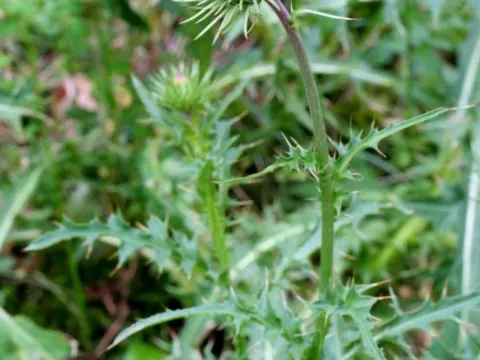
Thistle (Carduus) belongs to the Asteraceae family. While often categorized as an aggressive weed in field crops, as an agricultural crop for pharmacopoeia or as a honey plant, it requires an organized sowing approach.
5
items
What the section contains
Marketplace
Products in this section · 12


Thistle
Thistle seeds are mainly sown in the spring as soon as the soil warms up to 8-10 degrees Celsius. Winter sowing is permitted in regions with a temperate climate to allow for natural stratification of the seeds.
The planting depth is 1-2 centimeters. In industrial cultivation, a row-cropping method is used with spacing of 45-60 centimeters to ensure effective maintenance and weed control within the stands.
An important stage is the preparation of the seedbed; the soil must be thoroughly loosened and cleared of perennial weeds, as thistle seedlings develop slowly during the initial stages.
The seeding rate varies depending on the intended use (seeds or nectar production) and averages 2-4 kilograms per hectare, provided the seeds have a high germination rate.
The plant is known for its high adaptability; however, it prefers open, sunny locations. Shade negatively affects the growth rates and the accumulation of active pharmaceutical compounds in the plant tissues.
Thistle grows well on a variety of soil types, but fertile loams or chernozems with good aeration are preferred. Excessive moisture and stagnant groundwater are detrimental to the root system.
The crop is highly drought-tolerant due to a powerful taproot that penetrates deep into soil horizons, providing the plant with moisture even during unfavorable periods.
Thistle is not demanding regarding soil pH, although the best productivity indicators are achieved on neutral or slightly alkaline soils rich in calcium.
In terms of agronomy, thistle does not require intensive fertilization, as it can efficiently extract nutrients from the deeper layers of the soil profile.
The economic use of thistle spans the pharmaceutical industry, where plant extracts are in high demand. The yield of green mass and seeds depends directly on the density of plants in the field.
Up to 1.5-2 metric tons of seeds can be harvested per hectare under optimal agronomic conditions. Timely harvesting is a crucial factor to prevent seed shedding caused by the presence of pappus (the tuft of hairs).
Thistle is a valuable honey plant, capable of yielding up to 100-150 kilograms of honey per hectare. This makes it a profitable crop for beekeeping operations located near production fields.
Harvesting of medicinal raw materials (inflorescences and leaves) is conducted during the mass flowering period, when the concentration of flavonoids and other bioactive compounds is at its peak.
For processing raw materials, drying chambers are used where the temperature is kept below 45 degrees, preserving the plant's medicinal properties and the commercial quality of the product.
Despite its high viability, thistle is susceptible to several pathogens. The main threats include fungal diseases such as powdery mildew and various types of rust that affect the foliage.
Among pests, the larvae of various weevils and fruit flies cause the most significant damage by attacking the flower heads and destroying the developing seeds.
Aphids frequently colonize the stems and young leaves, sucking juices and inhibiting plant development. This not only reduces total biomass but can also facilitate the transmission of viral infections.
Disease prevention involves maintaining spatial isolation and crop rotation. It is not recommended to return thistle to the same field sooner than every 3-4 years.
In case of massive pest infestations, biological protection methods or authorized insecticides are used, keeping in mind pre-harvest intervals if the plant is intended for medicinal purposes.
Harvesting thistle seeds is technically challenging due to the uneven maturation of flower heads. The optimal period is when the heads begin to turn brown and the seeds darken.
A swathing method is primarily used. Plants are first cut into windrows to undergo a ripening phase, followed by threshing with combines using low drum speeds to minimize damage.
When harvesting medicinal raw materials, the cutting of flower heads is performed manually or by specialized mowers during dry weather. It is important to avoid including stem parts, which lowers the quality of the final product.
After collection, raw materials undergo primary cleaning to remove impurities and debris. Sieves and winnowing machines are used to separate seeds from the pappus, which complicates further processing.
Harvested crops are stored in dry, well-ventilated areas in paper or cloth bags, preventing moisture accumulation, which could otherwise lead to seed molding.