
Welted thistle
Carduus crispus L.
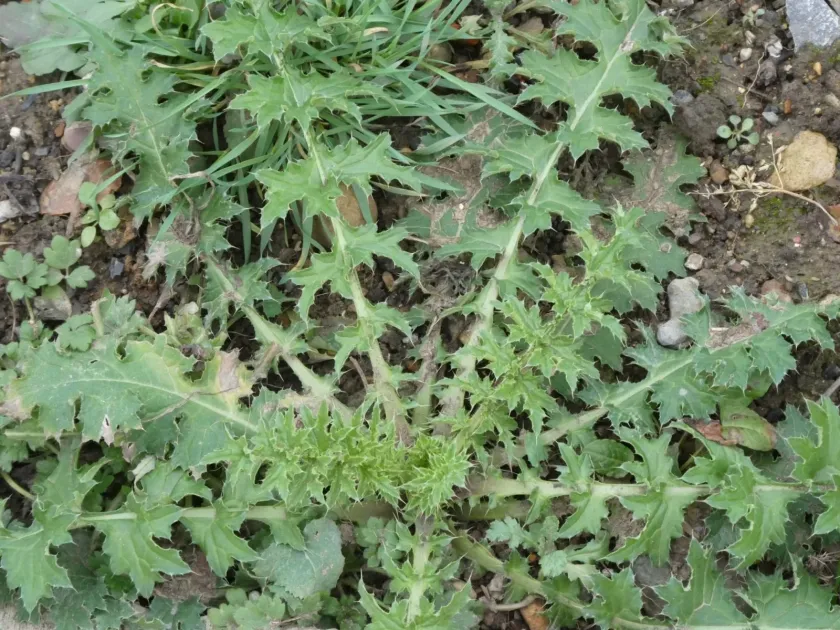
Description
Sowing dates
The welted thistle (Carduus crispus L.) belongs to the Asteraceae family. While often considered a weed in agricultural landscapes, it can be cultivated as a medicinal or melliferous plant in controlled environments.
Seeds of the welted thistle require a period of stratification to break dormancy. For commercial cultivation, sowing is typically done in the autumn, allowing the winter cold to naturally prime the seeds for spring germination.
Sowing depth should be kept shallow, between 1 and 2 centimeters, as the seeds require slight exposure to light to trigger optimal germination rates. Consistent soil moisture during the first few weeks is crucial for successful establishment.
Row spacing of 50 to 70 centimeters is recommended to allow the plants enough room to develop their rosette during the first year. This spacing also facilitates easier management of surrounding weeds during the initial stages of growth.
Once established, the welted thistle displays high competitive vigor, capable of outgrowing most surrounding vegetation. In the second year, the plant shifts its energy towards rapid vertical growth and flower production.
Growing requirements
The species is highly adaptable to various soil types, preferring nutrient-rich, loamy soils that offer good drainage. It performs poorly in compacted or waterlogged soils, which can lead to root rot and diminished vitality.
This plant is a sun-loving species. Full exposure to sunlight is essential for optimal nectar production and biomass accumulation. Shaded areas significantly inhibit the plant's growth and reduce its overall medicinal quality.
Welted thistle is drought-tolerant once fully established, thanks to its deep taproot system. However, for cultivation purposes, supplemental irrigation during the seedling stage and dry spells significantly boosts final yields.
The plant thrives in temperate climates and is highly frost-hardy. It is capable of overwintering as a basal rosette even in regions with harsh winters, ready to resume growth as soon as temperatures rise in the spring.
Soil pH levels should ideally be neutral or slightly alkaline. While the plant can survive in slightly acidic conditions, its growth rates and chemical compound concentration are optimized in slightly alkaline soil environments.
Yield
As a honey plant, the welted thistle is highly valued in apiculture. It provides a rich source of nectar throughout the mid-summer months, often supporting bee colonies when other major forage sources have declined.
In pharmacological and herbal industry applications, the aerial parts (leaves and stems) are harvested. Under optimal growing conditions, a yield of 3 to 4 tons of dry biomass per hectare can be achieved.
Seed production is another potential output, with yields ranging from 500 to 900 kilograms per hectare depending on crop management. These seeds are harvested for their oil content and bioactive constituents.
Although its physical prickliness limits its use as direct livestock feed, processed silage incorporating young thistle shoots can improve the mineral profile of forage when handled with proper shredding equipment.
The overall yield is heavily dependent on the plant's density. Higher density plantings during the first year promote higher flower counts in the second year, assuming sufficient soil fertility is maintained.
Main diseases and pests
Rust fungi are the primary pathological threat to welted thistle, especially in seasons characterized by high humidity. These infections manifest as brown or orange spots on the leaves, reducing photosynthetic efficiency.
Pests such as seed-eating flies and moth larvae (e.g., thistle-head weevils) pose a risk to seed quality. They bore into the flower heads, significantly lowering the commercial value of the harvested seeds.
Aphids can cause damage during the vegetative stage, concentrating on the undersides of leaves and at the growing points. Their feeding often leads to stunted development and can facilitate the transmission of viral diseases.
Good agricultural practices, such as maintaining proper spacing to ensure airflow, are the best defense against fungal outbreaks. Avoiding excess nitrogen fertilization also helps prevent overly succulent growth that attracts pests.
If chemical interventions are necessary, they should be applied only during the early vegetative phase to avoid harming pollinators, which are vital for the plant's reproductive cycle during the flowering phase.
Harvesting
Harvesting the aerial parts for herbal use is best performed at the peak of the flowering phase. Plants are cut using mechanized harvesters adjusted to the appropriate height to maximize the collection of floral tops and leaves.
Post-harvest drying must occur in well-ventilated, shaded areas or industrial dryers at low temperatures (below 45°C). Proper drying is essential to maintain the structural integrity of the plant and its active chemical profile.
Seed harvesting should be timed carefully when the flower heads transition from green to brown. If harvested too late, the seeds may shatter and disperse, leading to significant field losses due to the plant's wind-dispersal mechanism.
Cleaning the harvested seeds involves mechanical sieving or winnowing to remove the thorny bracts and chaff. Precision machinery is required to ensure a pure product suitable for market or propagation needs.
Final storage should be in cool, dry, and dark conditions to prevent mold formation. Using moisture-wicking containers helps ensure that the quality of the raw material remains stable throughout the storage period.