
Musk thistle
Carduus nutans L.
Description
Growing requirements
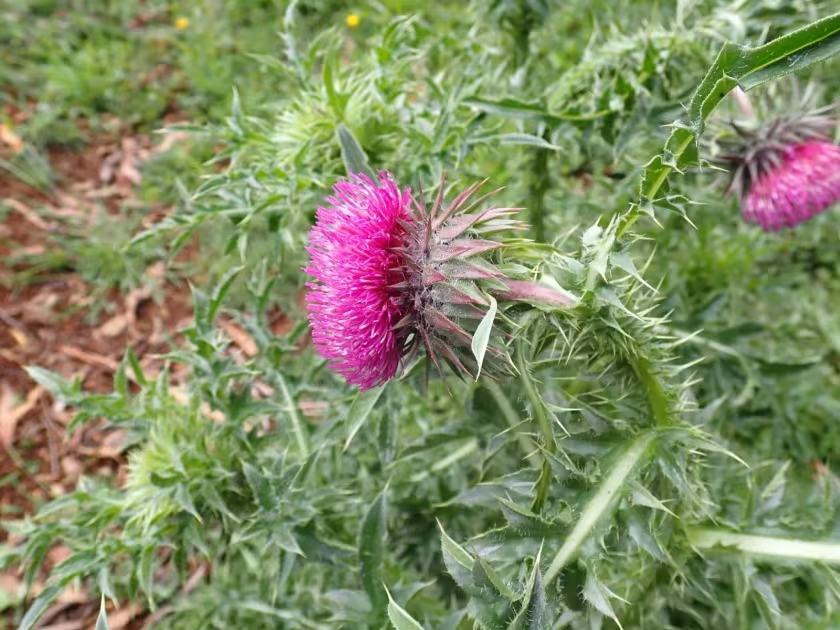
Musk thistle, known scientifically as Carduus nutans, is a robust biennial plant belonging to the Asteraceae family. It is characterized by its large, solitary, deep purple flower heads that characteristically nod or droop, which gives the species its common name.
Native to Europe, Asia, and North Africa, the plant has successfully naturalized in many regions globally. It thrives in various environments, showing a particular preference for disturbed soils, pastures, and roadsides where competition from native vegetation is minimal.
The plant requires full sun exposure and well-drained, fertile soil to reach its maximum height of 1.5 meters. It is highly adaptable to different pH levels but performs best in soils rich in nitrogen, which often leads to rapid, aggressive colonization of degraded farmland.
Biologically, the plant follows a strict biennial cycle. During the first year, it develops a large, rosette-shaped foliage structure close to the ground, while the second year focuses on stem elongation, flowering, and massive seed production, totaling thousands of seeds per plant.
While often viewed as a noxious weed due to its thorny nature and ability to crowd out forage grasses, it remains a valuable late-season nectar source for honeybees. Its management is essential in grazing areas where dense infestations can prevent livestock from accessing healthy forage.
Main diseases and pests
Biological control agents, particularly the weevil Rhinocyllus conicus, have been introduced in many countries to manage musk thistle populations. These insects target the flower heads, significantly reducing the amount of viable seed produced and controlling the weed's spread.
The plant is susceptible to several pathogens, including various rust fungi and powdery mildew, which can stunt its growth under humid conditions. These diseases, while not always fatal, reduce the overall vitality and competitive edge of the weed in dense populations.
Mechanical control, such as manual grubbing or mowing, is most effective if performed before the plant initiates its flowering phase. By severing the taproot or removing the central stem, managers can prevent the plant from regenerating and seeding for the next season.
Chemical control involving broadleaf-selective herbicides is highly recommended for larger infestations. Application timing is critical; treating the plant during the rosette stage in either autumn or spring ensures maximum efficacy with minimal impact on surrounding grasses.
Integrated pest management strategies often focus on maintaining a healthy, competitive pasture cover. By preventing bare spots through proper grazing rotations, landowners can naturally suppress the germination of musk thistle seeds and limit the establishment of new colonies.