
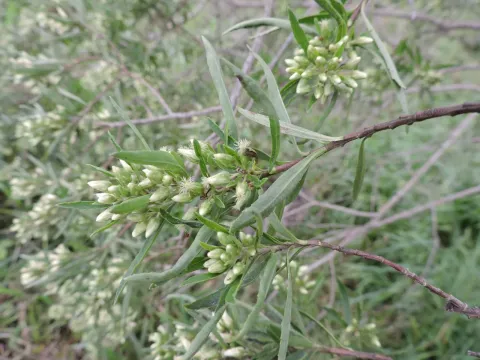
Baccharis semiserrata
Baccharis semiserrata
Baccharis semiserrata is a shrubby plant belonging to the Asteraceae family, which is appreciated for its robustness and specific adaptation to various soil types.
What the section contains
Baccharis semiserrata
The propagation of this crop can be successfully performed through seeds sown in greenhouses during the early spring to ensure stable germination conditions.
Vegetative propagation via semi-hardwood cuttings is a preferred method for commercial nurseries, requiring a well-draining rooting substrate.
Transplanting into the field is carried out once the danger of frost has passed, ensuring the plants have established a healthy root system.
Proper spacing between plants is crucial to avoid overcrowding, which is essential for maintaining the overall vigor and health of the shrub plantation.
The plant thrives in sunny locations, as it requires adequate light to produce dense foliage and maintain its characteristic growth habit.
Soil requirements for Baccharis semiserrata include well-drained, fertile substrates, though it shows some tolerance to varying soil pH levels.
Watering should be balanced; while the species is somewhat drought-tolerant once established, regular irrigation is beneficial during the initial growth phase.
Climate adaptation plays a major role, with the plant performing best in temperate to subtropical regions where it can express its full potential.
Routine pruning is recommended to encourage bushiness and to remove any dead or weak wood that could impede the plant's development.
Common pests affecting this species include aphids and mites, which are particularly prevalent during dry and warm seasons in the growing area.
Fungal pathogens may become a threat if soil drainage is poor or if the plants are situated in areas with high humidity and stagnant air circulation.
Integrated pest management strategies should be applied to control populations of harmful insects without harming the beneficial organisms in the environment.
Regular monitoring of the foliage and stems allows for early detection of potential disease outbreaks, such as leaf spots or stem rot infections.
Maintaining clear surroundings and reducing weed pressure will significantly lower the risk of pest colonization and competitive stress on the crop.