
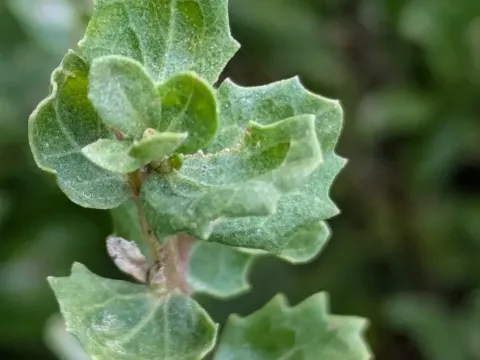
Baccharis pilularis
Baccharis pilularis
Baccharis pilularis, commonly known as coyote brush, is a dense evergreen shrub belonging to the Asteraceae family. It is native to the coastal regions of the Western United States, particularly California.
What the section contains
Baccharis pilularis
This species is highly valued for its exceptional drought tolerance and ability to thrive in poor soil conditions. It is an ideal plant for xeriscaping, requiring little to no supplemental irrigation once established.
The plant performs best in full sun, although it can tolerate partial shade. It requires well-draining soil, as it is highly susceptible to root rot in waterlogged or heavy, poorly aerated conditions.
Due to its extensive and deep root system, Baccharis pilularis is widely used in erosion control projects, particularly on steep slopes or coastal bluffs exposed to strong winds and salty air.
In addition to its structural role in landscapes, it serves as a critical late-season nectar source for various pollinators, including native bees, butterflies, and other beneficial insects.
The primary threats to Baccharis pilularis are related to overwatering and poor drainage. Phytophthora and other fungal pathogens can severely damage the root systems if the soil remains constantly moist.
Pest pressures are generally low; however, the plant can occasionally be affected by sucking insects such as aphids or scale insects. These are typically managed by ensuring the plant is not under stress.
Good air circulation is essential for preventing the buildup of moisture inside the foliage, which reduces the likelihood of mildew or fungal infections developing within the dense canopy.
Regular maintenance, including the removal of dead wood and judicious pruning to manage shape and size, helps maintain vigor and improves the plant's resistance to environmental stresses.
Integrated pest management, focusing on cultural practices rather than chemical control, is usually sufficient to manage any outbreaks that may occur in a standard landscape setting.