
Baccharis ramulosa
Baccharis ramulosa
Baccharis ramulosa is a perennial shrub belonging to the Asteraceae family. Native to the southern regions of South America, particularly Argentina, Uruguay, and parts of Brazil, this plant has evolved to thrive in diverse and often harsh environmental conditions.
What the section contains
Baccharis ramulosa
The plant requires well-drained soils, often exhibiting high tolerance for sandy, gravelly, or nutrient-poor substrates. It is exceptionally resilient to drought and can withstand significant temperature fluctuations, which defines its suitability for cultivation in semi-arid environments.
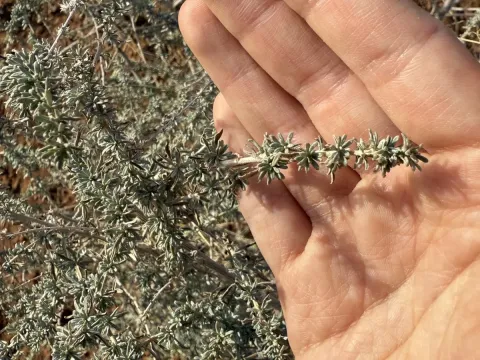
Botanically, it is characterized by dense, intricate branching and small, narrow leaves designed to minimize water loss. Its growth habit allows it to function effectively as a soil stabilizer, preventing wind erosion in open landscapes and exposed slopes.
In agricultural practice, it is highly regarded by beekeepers as a valuable source of late-season nectar. Furthermore, its dense structure makes it an excellent choice for windbreak hedges and natural fencing, providing ecological shelter for local fauna.
Scientific interest in Baccharis ramulosa is growing due to the complex chemical composition of its essential oils and secondary metabolites. These compounds are currently being studied for potential applications in natural pharmaceuticals and bio-control products.
The main threats to the health of Baccharis ramulosa are fungal infections that thrive in humid or poorly ventilated conditions. Powdery mildew and various rust fungi are the most prevalent diseases affecting the foliage during seasons of high atmospheric moisture.
Pest pressure primarily comes from leaf-eating beetles and specialized mites that target succulent new shoots. Additionally, root system attacks by soil-dwelling larvae can stunt growth in young plants, necessitating careful monitoring during the establishment phase.