
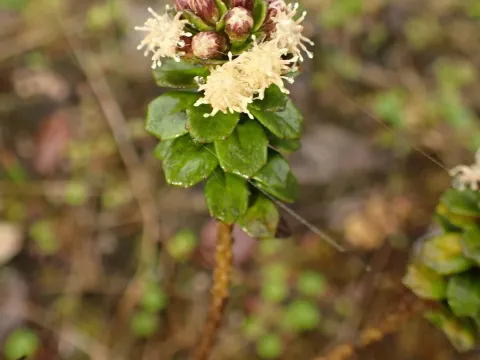
Baccharis tricuneata
Baccharis tricuneata
Baccharis tricuneata is a perennial shrub belonging to the Asteraceae family. Native to the mountainous regions of the Andes, this plant is well-adapted to high-altitude environments characterized by distinct climatic fluctuations and specialized ecological niches.
What the section contains
Baccharis tricuneata
The plant thrives in well-drained, sandy, or rocky soils that prevent waterlogging. It is highly tolerant of nutrient-poor substrates, making it an excellent candidate for the restoration of degraded slopes and areas with challenging terrain where typical crops fail to establish.
Climatically, Baccharis tricuneata requires exposure to intense solar radiation and moderate temperatures. Its ability to survive in environments with high wind exposure and intermittent moisture makes it a robust species for specific high-altitude agricultural projects.
Its botanical structure includes small, leathery leaves designed for water retention, which is a vital adaptation for the arid, alpine conditions of its native habitat. The root system is deep and expansive, providing both structural stability and efficiency in nutrient extraction.
Regarding its utility, the species is frequently recognized for its secondary metabolites. Research has highlighted its potential in medicinal applications, particularly due to the presence of terpenoids and phenolic compounds, which are extracted for pharmaceutical use.
The primary threats to Baccharis tricuneata plantations include fungal infections caused by excessive soil moisture and poor drainage. Ensuring high levels of soil aeration is the most effective preventative measure against root decay.
Leaf-feeding insects and various aphids are the most common pests that can impact the plant's growth rate. Early detection and the maintenance of a diverse ecosystem around the plantation serve as the best biological defense against infestations.
Environmental stress, such as unseasonal frosts or extreme drought, can weaken the plant's immune system, increasing susceptibility to secondary pathogens. Managing these risks requires careful site selection and the use of protective mulching practices.
Pathogen accumulation in the soil is a risk if the plant is grown repeatedly in the same area. Implementing crop rotation techniques is highly recommended to maintain soil health and reduce the overall pressure from soil-borne diseases.
Sustainable agricultural practices emphasize the use of natural fertilizers that promote root health without disrupting the symbiotic microbial communities in the soil. Maintaining this balance is key to ensuring long-term yield and botanical quality of the crop.