
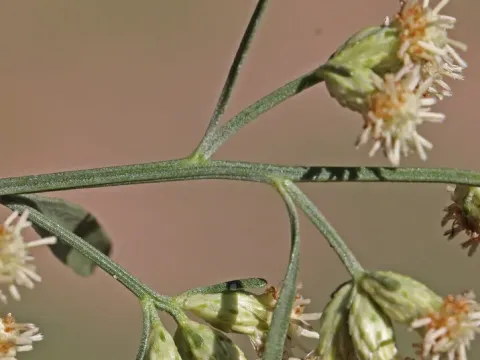
Baccharis pingraea
Baccharis pingraea
Baccharis pingraea is a perennial evergreen shrub belonging to the diverse Asteraceae family. Native to the regions of South America, specifically Argentina, Uruguay, and Southern Brazil, this species is well-adapted to the distinct climatic conditions of the pampas and coastal zones.
What the section contains
Baccharis pingraea
The plant exhibits remarkable hardiness, thriving in a variety of soil types ranging from sandy loams to heavier, more clay-rich substrates. It is particularly noted for its tolerance to saline environments, making it a robust candidate for restoration projects in challenging terrain.
Botanically, the species is defined by its dense branching and leaves often covered in a resinous layer. This adaptation serves as a defense mechanism against water loss and environmental stressors, which is typical for many members of the genus Baccharis.
Cultivation requirements are relatively low, as the plant establishes itself easily in full sun. While it can tolerate partial shade, optimal biomass production and health are achieved in well-drained locations with ample exposure to sunlight.
In terms of economic use, Baccharis pingraea is valued as a significant melliferous plant, providing nectar late in the season. Additionally, its extensive root system serves effectively in soil stabilization and erosion control efforts.
The most common threats to the health of this shrub involve fungal pathogens that can develop if the plant is subjected to poor drainage or stagnant air.
Insects, particularly aphids and certain types of leaf-eating larvae, may affect young, tender shoots during the peak of the growing season.
Root rot is a major concern in waterlogged soils, which can lead to the rapid decline of mature plants if environmental conditions are not managed.
Lack of proper pruning can result in a dense, overcrowded canopy that restricts light penetration, increasing the susceptibility of the interior foliage to pathogens.
General maintenance, including regular inspections and the removal of infected branches, is sufficient to keep the plant vigorous and free from major pest outbreaks.