
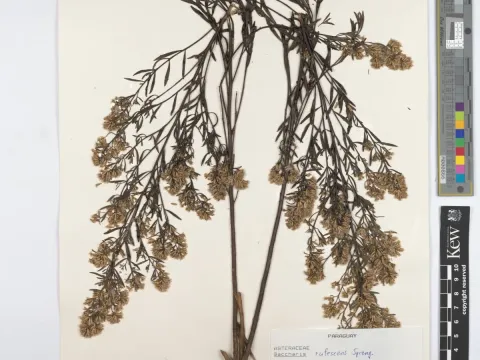
Baccharis rufescens
Baccharis rufescens
Baccharis rufescens is a perennial evergreen shrub belonging to the diverse Asteraceae family. Known for its distinct foliage characteristics, this plant species represents a significant component of the South American flora, where it has evolved to occupy specific environmental niches.
What the section contains
Baccharis rufescens
Native to South America, the distribution area of Baccharis rufescens is primarily linked to subtropical and tropical regions. It thrives in environments where sunlight is abundant, allowing the shrub to develop its characteristic dense growth habit and typical reddish-brown leaf pigmentation.
Botanically, the species is defined by its woody stems and resilient foliage, which allow it to withstand varying environmental stressors. The structure of the plant enables it to function effectively as a windbreak or a decorative focal point in landscape management projects.
In terms of cultivation, Baccharis rufescens requires well-drained soil to prevent root rot, which is a major concern for this shrub. It is relatively drought-tolerant once established but performs best when provided with consistent, though not excessive, moisture throughout the active growing season.
The primary agricultural and economic use of this plant is centered on its ornamental qualities in landscaping. Furthermore, its ability to thrive in poor soils makes it a candidate for soil stabilization and environmental restoration projects, helping to prevent erosion in vulnerable habitats.
The main threats to Baccharis rufescens include fungal pathogens that proliferate under high humidity conditions. Powdery mildew and leaf spot diseases are common, necessitating a management strategy focused on adequate spacing to ensure proper air circulation throughout the shrub's canopy.
Pests such as mites and certain scale insects are known to infest Baccharis species, potentially stunting growth and reducing the plant's aesthetic value. Integrated pest management, including monitoring and biological control methods, is recommended to ensure the longevity of the plantings.