
Baccharis viminea
Baccharis viminea
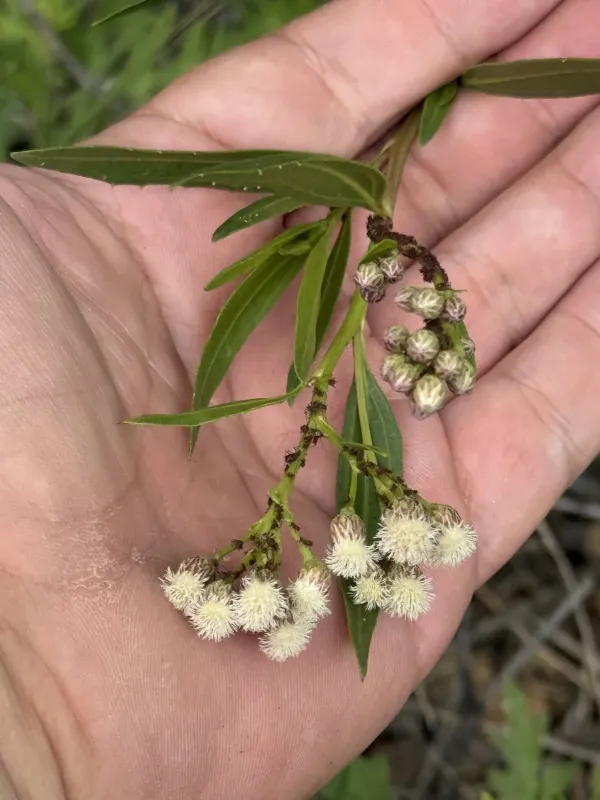
Description
Growing requirements
Baccharis viminea, commonly known as mule fat, is a perennial shrub belonging to the Asteraceae family. It is native to the southwestern United States and northwestern Mexico, typically thriving in riparian habitats and along stream banks.
This species is highly adaptable, preferring soils with consistent moisture, yet it demonstrates remarkable resilience to various soil textures, including sand and gravel. It is particularly valued for its ability to tolerate saline conditions.
Botanically, the plant is characterized by its slender, stiff, willow-like stems and narrow, lance-shaped leaves. It is a fast-growing shrub that can reach significant heights, often forming dense, impenetrable thickets in its natural environment.
Cultivation requires minimal intervention once the plant is established. It flourishes in full sun, which promotes dense branching and frequent flowering. Regular pruning is recommended to maintain the desired aesthetic shape and prevent it from becoming woody.
In terms of agricultural and environmental utility, Baccharis viminea is primarily used for erosion control on slopes and riverbanks. Its extensive root system stabilizes the soil, while the plant serves as a vital shelter for various wildlife species.
Main diseases and pests
Baccharis viminea is generally a robust plant with few serious health issues. However, poor drainage can lead to root rot, which is often fatal if not addressed by improving soil aeration and moisture regulation.
Aphids can occasionally colonize young, tender growth during the early growing season. These infestations are typically self-limiting but may require intervention in nursery conditions to prevent stunted growth.
Powdery mildew is a potential threat in locations with stagnant air and high humidity. Proper site selection, ensuring good airflow around the shrubs, is the most effective preventative measure against this fungal pathogen.
Spider mites might appear during prolonged heatwaves or drought conditions. Maintaining adequate irrigation and occasional misting of the foliage can deter these pests effectively.
Given its native hardiness, the plant rarely requires chemical pesticides. Most management strategies for Baccharis viminea rely on cultural practices, such as judicious pruning and proper site preparation.