
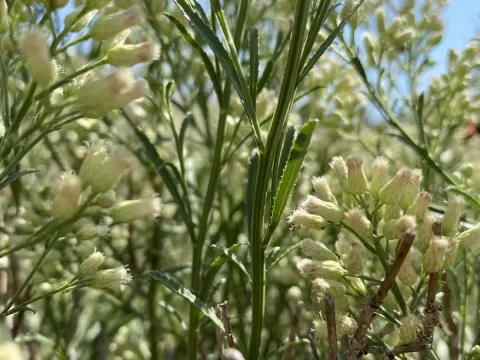
Baccharis thesioides
Baccharis thesioides
Baccharis thesioides, commonly known as Arizona baccharis, is a perennial evergreen shrub belonging to the Asteraceae family. Native to the southwestern United States and Mexico, this plant thrives in canyons and mountainous woodlands, demonstrating remarkable endurance in challenging environments.
What the section contains
Baccharis thesioides
The cultural requirements for this species prioritize well-drained, gritty, or sandy soils. It is highly adapted to nutrient-poor substrates, making it an excellent candidate for ecological restoration projects where soil fertility is limited and water availability is inconsistent.
The plant requires full sun exposure to maintain its compact growth habit and promote healthy flowering cycles. Excessive shade or poor light conditions will often result in leggy stems and reduced vigor, which negatively impacts the plant's overall aesthetic and protective value.
Regarding moisture, Baccharis thesioides is highly drought-tolerant once established. However, during the initial planting phase, consistent watering is required to ensure the root system is sufficiently deep to withstand subsequent dry seasons typical of its natural habitat.
In terms of agricultural use, this shrub is highly valued for erosion control on slopes. Its dense root system binds the soil, making it effective for stabilizing terrain in arid or semi-arid regions where conventional ground cover crops struggle to survive.
Disease pressures for Baccharis thesioides are primarily linked to humidity management. Root rot (Phytophthora or Pythium species) can occur if the planting site lacks proper drainage, especially following heavy rainfall events that saturate the soil for extended periods.
Pest threats primarily include sap-sucking insects such as aphids and spider mites. These pests tend to congregate on tender new growth, and while they rarely kill a healthy, mature shrub, they can significantly reduce its vitality and aesthetic appeal in managed landscapes.
Cultural control remains the most effective strategy against pests and diseases. Providing adequate spacing between plants ensures sufficient airflow, which prevents the build-up of moisture and deters the colonization of insects that prefer stagnant, humid micro-climates.
Integrated Pest Management (IPM) should be prioritized. Instead of broad-spectrum pesticides, target the specific localized infestations with insecticidal soaps or horticultural oils to protect the pollinator species that frequent the plant's nectar-rich flowers.
Regular monitoring of the lower canopy is essential. By identifying early signs of chlorosis or leaf spot, growers can intervene with corrective pruning or soil amendments before the issue becomes a systemic problem throughout the entire planting site.