
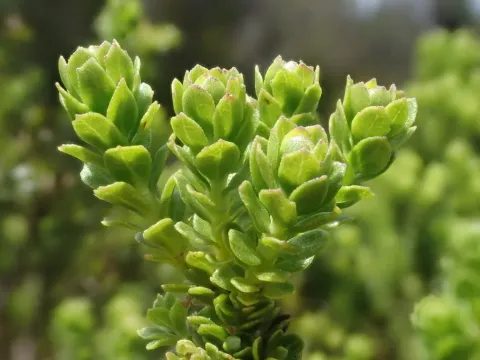
Baccharis patagonica
Baccharis patagonica
Baccharis patagonica is an evergreen shrub belonging to the Asteraceae family. Native to the harsh environments of Patagonia and Southern South America, this plant is remarkably resilient to wind and low-temperature conditions.
What the section contains
Baccharis patagonica
The plant thrives in full sun exposures, which are essential for maintaining the density of its foliage. Proper air circulation is necessary to ensure the plant's health and to reduce the risk of humidity-related issues within the dense crown.
It prefers well-drained, slightly acidic to neutral sandy soils. While it exhibits tolerance to occasional drought, it does not perform well in waterlogged soil conditions, which can lead to rapid root degradation.
Botanically, it features small, leathery leaves designed for moisture retention in its native windy habitats. Its growth habit is typically bushy and compact, making it an excellent choice for hedge formation or structural planting.
In landscaping, it is valued for its hardiness and evergreen nature. It is often used to stabilize slopes or as a windbreak in coastal or mountain regions where other species might struggle to establish.
The primary threats to Baccharis patagonica include fungal pathogens that develop in stagnant, humid environments. Root rot and foliage spots are the most common consequences of improper drainage or overwatering.
Pests such as spider mites and aphids may infest the plant, particularly during hot and dry spells. These infestations can weaken the shrub, making it more susceptible to environmental stress and secondary infections.
To mitigate these risks, growers should ensure proper spacing between plants to encourage airflow. Removing dead or diseased branches is also crucial for maintaining plant hygiene and preventing the spread of spores.
While the plant is hardy, it may require protection from extreme frost in non-native climates. Providing a layer of mulch around the base can help regulate soil temperature and retain essential moisture.
Regular monitoring for pests and diseases is recommended for optimal growth. By following basic horticultural practices, Baccharis patagonica remains a long-lived and attractive addition to any garden or protected site.