
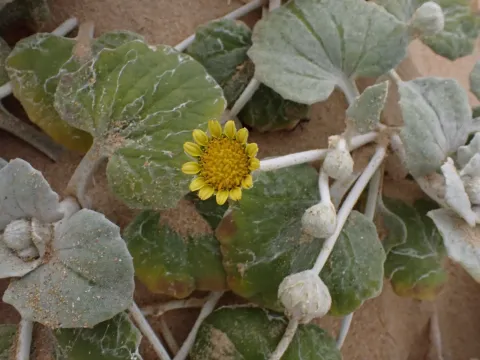
Arctotheca populifolia
Arctotheca populifolia
Arctotheca populifolia is a perennial herb belonging to the Asteraceae family. It is widely recognized for its silver-felted foliage and its ability to act as a resilient ground cover in harsh, nutrient-poor coastal environments.
What the section contains
Arctotheca populifolia
Originating from the coastal dunes of Southern Africa, this species has evolved to withstand high salinity, intense solar radiation, and strong maritime winds. These traits make it an excellent choice for environmental restoration projects.
Botanically, the plant is characterized by its succulent-like leaves, which are adapted to conserve water. This physiological trait allows it to thrive in sandy soils that have minimal moisture-retention capacity.
The primary requirement for successful growth is well-drained soil. Whether in a natural habitat or a controlled landscape, preventing water stagnation is the most critical factor in maintaining the health of this species.
Arctotheca populifolia thrives in full sun and moderate climates. It is highly effective at binding shifting sands, which prevents erosion and supports the natural succession of coastal vegetation communities.
The most significant threat to Arctotheca populifolia is root rot, which typically occurs due to poor soil drainage or over-irrigation. Ensuring the substrate remains porous is the best defense against fungal pathogens.
Powdery mildew can affect the foliage if there is inadequate air circulation around the plants. Proper spacing during planting is essential to reduce humidity levels and promote a healthier growing environment.
Pests such as aphids may occasionally infest the plant, feeding on the soft tissues of the new growth. Early detection and the use of appropriate control measures are necessary to prevent population outbreaks.
Root-knot nematodes are another potential issue when the plant is grown in sandy soils. Monitoring soil health and selecting certified planting materials helps mitigate the risk of nematode infestation.
Competitive weeds are a persistent threat, especially during the establishment phase. Keeping the area free of aggressive invasive plants allows the root system of the crop to expand effectively without resource competition.