
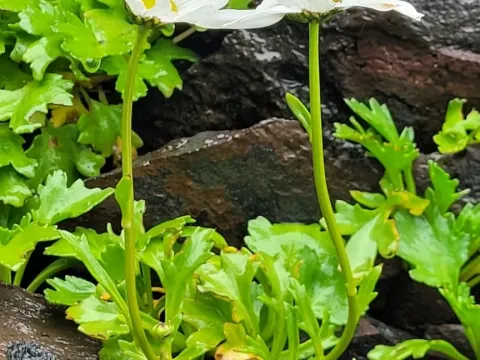
Arctic chrysanthemum
Arctanthemum arcticum
Arctic chrysanthemum (Arctanthemum arcticum) is a perennial herbaceous plant belonging to the Asteraceae family. This species is native to the circumpolar regions of the Northern Hemisphere, where it has evolved to thrive in harsh, tundra-like environments.
What the section contains
Arctic chrysanthemum
The plant is characterized by its compact habit and ability to withstand severe sub-zero temperatures. It features robust, dark green leaves and classic daisy-like flowers with white ray florets and yellow centers, blooming predominantly in late summer and autumn.
In terms of climate, the species requires cool temperatures and excellent light exposure. It performs poorly in hot, humid climates and is ideally suited for regions with short, cool growing seasons where it can maintain its structural integrity.
The soil requirements focus on moisture regulation. The plant prefers well-drained, sandy or loamy soils with a neutral pH. It cannot tolerate waterlogged conditions, which are the primary cause of plant failure during the dormant winter period.
In landscape architecture, the Arctic chrysanthemum is valued for its hardiness and reliable late-season bloom. It is effectively used in rock gardens, borders, and alpine-themed plantings, providing a resilient source of color when other perennials have finished flowering.
Propagation is primarily achieved through division of the root mass or softwood cuttings. Division should be performed in early spring as soon as the soil becomes workable, ensuring each section has healthy roots and dormant buds.
Seed propagation is also possible but requires stratification. Sowing seeds in autumn allows them to undergo the necessary cold period naturally, which significantly improves germination rates when temperatures rise in early spring.
When transplanting, ensure that the plants are spaced at least 30 cm apart to allow for airflow. Providing adequate space is crucial for plant health, especially in damp climates where humidity can trigger fungal infections.
Initial watering is essential for establishment, but once the root system is well-developed, the plant demonstrates good drought tolerance. Excess fertilization should be avoided, as it encourages weak, leggy growth that is prone to lodging.
Annual maintenance involves removing spent blooms to encourage cleaner plant appearance. Every few years, division helps maintain plant vigor, as it prevents the central part of the clump from becoming congested or dying back.
The main threats to the Arctic chrysanthemum are fungal pathogens, particularly powdery mildew and root rot. These diseases thrive in environments with poor air circulation, high humidity, or stagnant water in the root zone.
Insect pests, such as aphids and spider mites, can occasionally colonize the tender foliage during dry spells. These pests weaken the plant by sucking sap, which may lead to stunted growth and reduced flower production.
Root rot is the most dangerous condition for this species, often resulting from heavy, clay-rich soils that retain too much moisture during the autumn and winter months. Ensuring a gritty, well-drained medium is the best preventative measure.
Managing the plant environment is essential for effective disease control. Proper site selection, avoiding overcrowding, and careful watering practices significantly reduce the need for chemical intervention.
- Ensuring high soil permeability.
- Removing debris to prevent fungal spores.
- Monitoring for sap-sucking insects.
- Dividing overgrown clumps to ensure vigor.