
Argyranthemum-Rhodanthemum
Argyranthemum Webb ex Sch. Bip. x Rhodanthemum (Vogt) B. H. Wilcox et al.
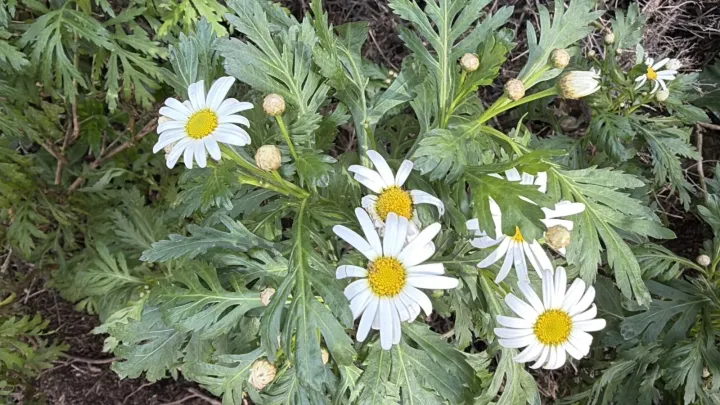
Description
Sowing dates
Propagation of this crop is mainly vegetative, as intergeneric hybrids often show low seed viability. The optimal time for taking cuttings is late winter or early spring.
To speed up rooting, cuttings are placed in a well-aerated substrate, maintaining a temperature of about 20 degrees Celsius. It is important to ensure a stable light regime during the rooting phase.
If seeds are used, sowing is carried out in March in nursery trays. The seeds should be sown at a depth of no more than 0.5 centimeters.
Pricking out the seedlings is performed when two true leaves appear, using pots with a diameter of 9–11 centimeters. This facilitates the development of a strong root system before transplanting.
Hardened seedlings are planted in a permanent location in the open ground only after the risk of night frost has passed. The crop is sensitive to temperature fluctuations.
Growing requirements
The plant belongs to the Asteraceae family and is an artificially bred hybrid. It combines the hardiness of the Rhodanthemum genus with the ornamental qualities of Argyranthemum.
The crop prefers well-lit areas with direct sunlight. In the shade, shoots become leggy, and the intensity of flowering is significantly reduced.
The soil must be fertile, well-drained, and neutral in pH. Stagnant moisture in the root zone is detrimental to this type of plant.
Moisture requirements are moderate: it is necessary to ensure regular watering while avoiding waterlogging of the substrate. In hot periods, water demand increases.
For abundant flowering, the plant requires regular fertilization with complex mineral fertilizers. Potassium is particularly important during the budding period.
Main diseases and pests
The main threat to the crop comes from fungal diseases that develop due to excessive soil moisture. These include root rots and powdery mildew.
Pests such as aphids and thrips frequently infest young leaves and inflorescences. Regular plant monitoring allows for the early detection of insect colonies.
Spider mites may appear under conditions of dry air and high temperatures. If signs of infestation are detected, acaricidal agents should be used.
Disease prevention includes maintaining spatial isolation and proper watering regimes. It is recommended to avoid dense planting to ensure adequate air circulation.
Biological control methods and the use of systemic fungicides show high efficacy in commercial cultivation environments.