
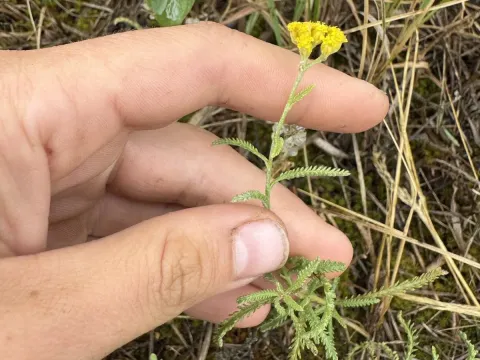
Achillea micrantha
Achillea micrantha
Achillea micrantha seeds are typically sown in early spring once the soil temperature consistently reaches 8–10 degrees Celsius. Seed treatment is often recommended to improve germination rates.
What the section contains
Achillea micrantha
The seeds should be sown at a shallow depth of approximately 0.5 to 1 centimeter. Because the seeds are tiny, maintaining surface soil moisture is crucial during the initial stages of establishment.
Late autumn sowing is another viable option, as it allows seeds to undergo natural stratification. This technique often results in more vigorous spring growth compared to spring sowing.
Maintaining a row spacing of 45 to 60 centimeters is standard for commercial production, allowing for easier weed management and mechanical cultivation between rows.
Young plants develop slowly during their first year, forming a basal rosette. It is essential to keep the plot free from competing weeds until the plant matures.
Achillea micrantha, a member of the Asteraceae family, is a hardy perennial. It is highly valued for its drought tolerance and ability to thrive in poor soil conditions.
The plant prefers sandy or loamy soils with excellent drainage. Excessive moisture or waterlogged conditions are detrimental to its health and should be strictly avoided.
Full sun exposure is mandatory for optimal growth and secondary metabolite production. Shaded environments tend to produce weak plants with lower concentrations of active ingredients.
It is well-adapted to temperate climates and demonstrates strong frost resistance. No special winter protection is usually required for established plantations.
The botanical structure consists of fine leaves and small, yellow flower heads arranged in dense clusters. The soil pH should ideally remain between 6.0 and 7.5 for best results.
The yield of Achillea micrantha depends significantly on soil fertility and plantation management. Typically, a harvest can yield several tons of dry biomass per hectare.
Peak productivity is generally achieved in the second or third year of growth. A well-managed plantation can remain economically productive for several years before replanting is necessary.
Applying potassium and phosphorus-based fertilizers can enhance root development and increase the overall harvest quality. Nitrogen should be used sparingly during the vegetative phase.
While the primary goal may be general biomass, harvesting specific flower parts increases product value for the pharmaceutical and cosmetic industries.
Efficiency increases when farmers integrate local drying and processing facilities to ensure the chemical stability of the harvested herb.
Powdery mildew and rust are common fungal diseases that affect Achillea micrantha, especially in humid and poorly ventilated conditions. Prevention through proper spacing is key.
Pests like aphids and leaf rollers may occasionally target the developing flower heads. Integrated pest management (IPM) practices are recommended to minimize chemical use.
Root rot is a persistent risk in poorly drained soil. Ensuring proper soil structure and avoiding low-lying fields is essential to protect the longevity of the perennial crop.
Nematodes can pose a threat in specific environments. Crop rotation practices should be strictly observed to break the lifecycle of soil-borne pests and diseases.
Routine scouting of the field allows for early detection of stress or disease, enabling targeted interventions before widespread damage occurs to the crop.
Harvesting should be conducted during the peak flowering period, as this is when the plant's essential oil and active compound content are highest.
The plants are mowed at a height of 10–15 centimeters from the ground. This preserves the crown and allows for healthy regrowth in the following season.
Post-harvest management is critical; biomass must be dried immediately after cutting to prevent fermentation and heat buildup within the raw material.
Drying is best achieved in temperatures not exceeding 45 degrees Celsius to preserve the delicate aroma and medicinal profile of the harvested flowers.
Once dried, the product should be stored in cool, dark, and moisture-free conditions to ensure its shelf life and quality for pharmaceutical distribution.