
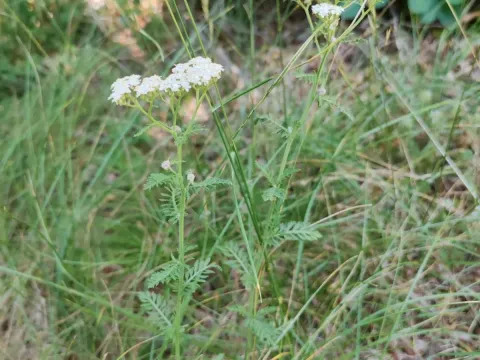
Achillea distans
Achillea distans
Sowing of Achillea distans in agricultural conditions is usually carried out by seeds directly into open ground. The most favorable time for this is early spring, once the soil warms up to at least 10 degrees Celsius, or late-autumn sowing in October.
What the section contains
Achillea distans
To obtain high-quality raw material, seeds are sown in rows with a spacing of about 45-60 centimeters. This provides sufficient space for the development of a powerful root system and proper plant ventilation.
The seeding depth should be minimal, no more than 0.5–1 centimeter, as the seeds are quite small. Surface sowing requires light soil compaction to ensure close contact between the seeds and the substrate.
Seedlings emerge uniformly under sufficient moisture levels 14–20 days after sowing. The initial development of seedlings is slow, so timely weeding is crucial to eliminate competition from weeds.
Using a seedling method is also acceptable for smaller plantations. Seedlings are transplanted into the ground at the 3–4 true leaf stage, which allows for shortening the time until the first harvest by 2–3 weeks compared to direct sowing.
Achillea distans belongs to the Asteraceae family and is a perennial herbaceous plant. In the wild, it grows in mountain meadows, forest clearings, and rocky slopes of Europe, which determines its high ecological plasticity.
The crop prefers well-lit areas. The plant can withstand partial shade, but full sun exposure significantly increases the accumulation of essential oils and active biological compounds in the aerial parts.
The crop is not demanding regarding soil conditions, but it performs best on well-drained, moderately fertile loams or sandy loams. Excessive moisture and water stagnation can lead to rhizome rot.
The plant has high drought resistance due to its developed taproot system. It is well-adapted to temperature fluctuations and can be cultivated in regions with moderately cold winters without the risk of freezing.
In industrial cultivation, it is important to ensure a neutral or slightly acidic soil reaction. On poor soils, the application of phosphorus-potassium fertilizers during the active growing season is recommended to improve plant immunity.
The yield of Achillea distans depends on growing conditions and the age of the plantation. In the second year of life, the plant reaches maximum productivity, forming a dense vegetation cover.
On average, one hectare of the plantation can yield between 1.5 to 3 tons of dry plant raw material. The green mass yield is 8–12 tons depending on the frequency of cuts per season.
Factors determining high yields include regular fertilization and adherence to the mowing regime. Timely removal of flower stalks stimulates the regrowth of additional vegetative mass.
A secondary harvest can be collected 40–50 days after the first cut if climatic conditions allow and irrigation is provided. With long-term cultivation, the plantation remains productive for up to 5 years.
The quality of the harvest is determined by the content of flavonoids and essential oils. Industry standards require drying the raw material at a temperature not exceeding 45 degrees to preserve all the medicinal properties of the plant.
Achillea has pronounced phytoncidal properties, making it quite resistant to most pests. However, high air humidity can lead to fungal diseases.
Powdery mildew is the most common issue when agricultural practices are violated. It manifests as a white coating on the leaves, requiring the use of fungicides or the removal of affected plant parts.
Rust may affect plantations in rainy years. Prevention involves maintaining optimal planting density and avoiding overcrowding, which hinders free air circulation.
Among pests, aphids and the meadow moth can cause the most damage. In cases of significant infestation, the use of biological insecticides, which are safe for bees and other pollinators, is recommended.
Root rots are extremely rare and are usually associated with heavy or waterlogged soils. A healthy crop rotation and the selection of well-drained plots minimize the risk of yield loss.
Harvesting of Achillea is carried out during the period of mass flowering. This time is characterized by the maximum concentration of active substances in the flower heads and leaves used in the pharmaceutical industry.
The raw material is collected by mowing the aerial part of the plant at a height of 5–10 centimeters from the soil surface. It is important to avoid including the coarse lower parts of the stem, which reduces the quality of the final product.
Works are best conducted in the morning hours after the dew has evaporated. Dry, sunny weather promotes faster initial wilting of the raw material, which is critical for quality.
After cutting, the raw material is immediately sent for drying. It is laid out in a thin layer under canopies or in specially equipped dryers with good ventilation to prevent overheating and color loss.
The finished raw material is stored in dry, dark, and cool rooms. When all packaging technologies are observed, the herb of Achillea distans retains its commercial and medicinal properties for up to two years.