
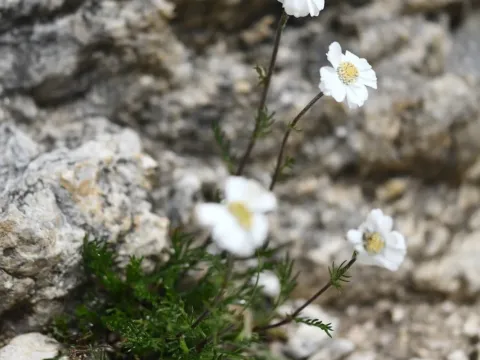
Achillea oxyloba
Achillea oxyloba
The sowing of Achillea oxyloba typically begins in the spring once soil temperatures consistently reach 10-12 degrees Celsius for optimal germination.
What the section contains
Achillea oxyloba
It is highly recommended to stratify seeds for two to three weeks before planting to break dormancy and ensure uniform emergence across the field.
Seeds should be planted at a shallow depth of approximately 0.5 to 1 centimeter, as they require adequate light and moisture to initiate the growth process.
When seeding in rows, a spacing of 40-50 centimeters between lines is ideal, allowing enough room for the plant to develop its basal rosette of leaves.
Alternatively, greenhouse propagation can be used to produce seedlings, which can later be transplanted to the field for a more controlled start to the season.
As a member of the Asteraceae family, this species thrives in well-drained soil, preferring sandy or loamy textures that do not retain excess moisture.
Achillea oxyloba is a sun-loving plant, making it essential to choose sites with full solar exposure to maximize the accumulation of active phytochemicals.
The plant is remarkably drought-tolerant, owing to its evolutionary adaptation to mountain environments, allowing it to withstand prolonged dry spells.
Soil pH should ideally remain within the neutral to slightly alkaline range (6.0–7.5) to support healthy nutrient uptake and general plant vitality.
Regular maintenance, including occasional weeding and soil aeration, helps promote strong root development during the first year of establishment.
The total yield of Achillea oxyloba depends significantly on plant density and the intensity of the care provided throughout the growing season.
Under favorable conditions, yields of dried biomass can range between 1.5 to 2.5 tonnes per hectare, depending on the age of the established stand.
Productivity increases as the plants mature into their second and third years, forming a more robust root system and producing more flowering stems.
Targeted fertilization with phosphorus and potassium during the budding phase can significantly boost the overall quantity and quality of the crop yield.
To prevent yield decline, it is recommended to renovate the plantation or rotate crops after five to seven years of continuous cultivation.
Common issues include fungal infections like powdery mildew, which are more prevalent in areas with high humidity or poor air circulation within the canopy.
Pests such as aphids and various plant bugs may cause damage to succulent new growth, negatively impacting both plant health and market quality.
Managing soil moisture is critical, as waterlogged conditions frequently lead to root rot, a devastating condition for this drought-adapted species.
Integrated pest management strategies, focusing on biological controls and proper crop rotation, are effective in minimizing reliance on chemical treatments.
Regular monitoring of the fields for early signs of disease allows for quick intervention, preventing the spread of pathogens across the entire plot.
The harvesting process should be executed during the peak flowering stage when the essential oil concentration is highest for medicinal use.
Stems should be cut roughly 20 centimeters above the ground, ensuring that only healthy, leaf-rich parts of the plant are collected for high-quality output.
Post-harvest, the material must be dried in a shaded, well-ventilated area to protect the integrity of the volatile compounds and maintain its color.
Once drying is complete, the herb should be carefully processed, cleaned of debris, and stored in airtight containers to prevent loss of potency.
Storing the dried product in a cool, dark environment is essential for preserving shelf-life and preventing quality degradation before reaching the market.