
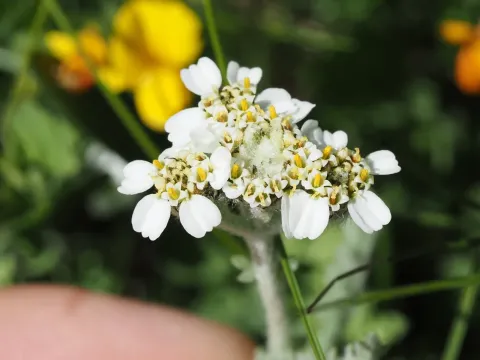
Achillea nana
Achillea nana
Sowing Achillea nana is best performed in the late autumn or early spring, as the seeds require a period of cold stratification to break dormancy and germinate successfully.
What the section contains
Achillea nana
Seeds should be sown shallowly on a well-draining substrate, as they need light to trigger the germination process and must not be buried deeply.
During the nursery phase, maintaining stable temperatures between 15 and 20 degrees Celsius is essential for uniform emergence of the seedlings.
Seedlings should be handled with care when transplanting to avoid damaging their sensitive root systems, which are adapted to rocky, loose soils.
Once established, the plants prefer to be placed in their permanent location early in the season to allow root development before the onset of summer heat.
Achillea nana, a member of the Asteraceae family, is a dwarf perennial native to the high altitudes of the European mountains, where it thrives in harsh conditions.
The culture requires extremely well-draining, gritty, or sandy soil to simulate its native alpine environment, as it is highly susceptible to root rot in heavy soils.
Full sun exposure is mandatory for this species, as shading will result in etiolated growth and a significant reduction in the synthesis of active medicinal compounds.
In terms of fertilization, less is better; excessive nitrogen will result in oversized, floppy growth that loses the plant's characteristic compact, dwarf form.
The plant is highly tolerant of drought once established, but it must be protected from prolonged winter wetness, which is the primary cause of plant failure in non-alpine climates.
Root rot, driven by stagnant water and poor soil aeration, remains the most significant threat to the survival of Achillea nana plantations.
Powdery mildew may occur if the plants are crowded together or if air circulation around the foliage is insufficient during humid weather conditions.
Aphids often target the young flower stalks, sucking sap and weakening the plant, which can be mitigated by regular inspections and early intervention.
Root-knot nematodes can also be a significant issue in warmer, humid environments, often going unnoticed until the plant's growth begins to decline.
Prevention is the best strategy; ensuring a stony, lean soil profile and avoiding overhead watering helps maintain plant health and reduces the need for chemicals.
Harvesting for medicinal purposes occurs at the height of the flowering period when the concentration of essential oils and flavonoids is at its peak.
The upper flowering stems are harvested using precise cutting tools, leaving enough of the plant behind to ensure the crown remains healthy and capable of future growth.
Drying should take place in a dark, airy room to preserve the essential oils, as high heat or direct sunlight will degrade the plant's delicate aromatic compounds.
Properly dried material is then stored in airtight glass containers to maintain its potency, which is valued for its traditional antispasmodic and digestive health benefits.
Besides medicinal applications, Achillea nana is highly sought after by alpine garden enthusiasts for its unique, silvery foliage and long-lasting, fragrant flower heads.