
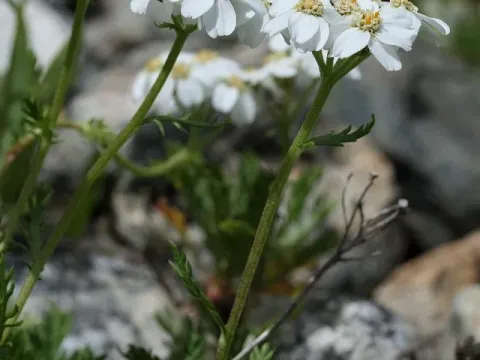
Achillea erba-rotta
Achillea erba-rotta
The sowing of Achillea erba-rotta is primarily performed using seeds. The optimal time for sowing is early spring or late autumn, as the seeds require natural stratification to achieve uniform germination.
What the section contains
Achillea erba-rotta
For greenhouse cultivation, seeds are sown in trays in March. They are distributed over the moist substrate and covered with a light layer of sand, as they require light to germinate effectively.
Transplanting into the open field is conducted after the threat of late frosts has passed. Maintaining adequate spacing between plants is crucial for the full development of the root system.
When sowing directly into the field, the seeds should be placed at a depth no greater than 0.5 cm. The soil must be loose to ensure oxygen access and to avoid hindering the growth of seedlings.
Seedlings typically emerge within 2-3 weeks after sowing. During the initial period, regular but moderate irrigation is required to prevent the top layer of the soil from drying out.
Achillea erba-rotta is a perennial herbaceous plant from the Asteraceae family, originating from the alpine and subalpine regions of Europe. It thrives in open, sunny locations.
The culture has low soil fertility requirements, successfully developing on rocky and poor substrates. A critical condition is excellent drainage, as the plant does not tolerate waterlogging.
Neutral or slightly alkaline soils are optimal for growth. A high lime content in the substrate positively influences the synthesis of essential oils in the leaves and inflorescences.
The plant possesses high frost resistance typical of high-altitude species. It is capable of withstanding significant temperature fluctuations and strong winds common in its natural habitat.
In intensive agronomy, it is important to avoid over-irrigation and excessive nitrogen fertilization, which promote unnecessary vegetative growth at the expense of raw material quality.
The yield of the aerial part (herb) depends heavily on planting density and seasonal conditions. On average, one hectare of plantation can yield 1.5 to 2.5 tons of dry produce.
The peak accumulation of biologically active substances occurs during the period of full flowering. Harvesting is conducted specifically at this stage for pharmacological and culinary purposes.
As a perennial crop, it allows for harvests on the same site for 3-5 years. Over time, the clumps may become dense, necessitating the division of rootstocks to rejuvenate the plantings.
The essential oil yield is relatively low but is highly valued due to its specific aromatic composition. The quality of the final product depends directly on drying and storage conditions.
To increase yield, regular weeding is recommended during the first year of vegetation, as the plant develops slowly and competes poorly with weeds in the early stages.
The main threats to the crop are fungal diseases associated with excessive moisture. Root rot is the most dangerous, often leading to the death of the entire plant cluster.
Powdery mildew can affect the leaf apparatus during periods of high humidity and poor air circulation. Proper plant spacing acts as a primary preventive measure.
Among pests, aphids cause the most significant damage by sucking sap from young shoots and flower stalks. They can also transmit viral diseases that reduce plant productivity.
Larvae of certain insect species may damage the root collar, weakening the plant's immunity. Monitoring plant health during the spring season allows for timely intervention.
Disease and pest control should be based on integrated pest management (IPM) methods that limit the use of synthetic pesticides to preserve the quality of the medicinal material.
Harvesting is conducted during the full flowering period when the concentration of active components reaches its peak. The upper part of the stem, approximately 15-20 cm long, is cut.
Work is best scheduled for the morning hours after the dew has evaporated. This preserves the essential oils, which volatilize more rapidly when the plant is heated by the sun.
Harvested material should be sent for drying immediately. Shadow drying in well-ventilated rooms or specialized industrial dryers at temperatures below 40 degrees is ideal.
Failure to follow proper drying technology can result in darkening of the material and loss of therapeutic value. High-quality product maintains its characteristic color and aroma.
Storage of dried Achillea erba-rotta is carried out in paper bags or airtight containers in a dry, dark, and cool place to prevent the oxidation of components.