
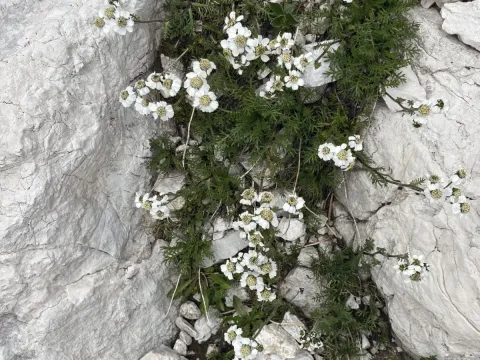
Achillea atrata
Achillea atrata
Achillea atrata is a perennial herbaceous plant that is typically propagated from seeds sown in a protected environment during late winter.
What the section contains
Achillea atrata
Seeds require a period of stratification to break dormancy, mimicking the natural freezing and thawing cycles of their native alpine habitats.
In temperate zones, sowing in open ground should be delayed until the spring frost period has completely passed to protect the tender seedlings.
The early stages of growth are slow, necessitating careful monitoring of moisture levels to ensure the establishment of a robust root system.
Vegetative propagation via root division is another viable method, usually performed in early spring or autumn to minimize transplant stress.
As a true alpine species, this plant is perfectly adapted to harsh environmental conditions, including high winds and significant temperature fluctuations.
The selection of an open, sunny location is critical, as the plant requires abundant light to produce strong stems and healthy flowering stalks.
Soil composition should be sandy or rocky to provide excellent drainage, as the species is highly susceptible to root rot in waterlogged conditions.
The plant thrives in nutrient-poor, neutral to slightly alkaline soils and does not require extensive fertilization programs to reach maturity.
It displays remarkable hardiness against cold, capable of surviving buried under deep snow cover for extended periods during the dormant winter phase.
The commercial yield of this culture is measured by the total weight of harvested flowering aerial parts obtained during the peak growing season.
Optimal yields are achieved through meticulous weed management and ensuring the plants have adequate spacing to promote airflow around the canopy.
Though not a widespread commodity, the plant is highly valued in specialty medicinal herb production for its specific botanical properties.
Consistency in yield typically improves from the second year onwards as the rootstock becomes well-established in the designated field location.
Regular maintenance, including the removal of spent flower heads, encourages secondary growth and maximizes the overall botanical harvest per season.
The primary agricultural threat to Achillea atrata is the presence of stagnant water, which rapidly causes decay of the roots and the crown.
Pests such as aphids and spider mites can infest the soft tissues during the growing season, potentially reducing the quality of the harvested biomass.
In conditions with poor air circulation and high humidity, powdery mildew can occur, forming a white film on the foliage and impairing photosynthesis.
Effective management includes maintaining clean fields and using preventative measures to ensure the plants remain in a state of high vigor.
Competitive weeds are a significant concern, as their rapid growth can easily overtake the slower-growing yarrow specimens if left unchecked.
Harvesting should take place during the peak bloom period when the plant's active chemical constituents are at their highest concentration.
The stalks are cut approximately 25 centimeters from the base, ensuring that the harvest does not remove too much of the plant's photosynthetic foliage.
Drying must be conducted in shaded, airy conditions to preserve the volatile compounds that are essential for the plant's market quality.
Material should be arranged in single layers to prevent dampness and fungal development during the critical initial stages of the drying process.
Properly cured and stored in airtight containers away from direct light, the harvested plant material remains stable for long periods of time.