
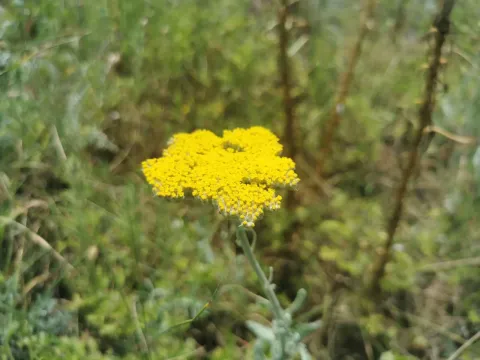
Achillea clypeolata
Achillea clypeolata
The sowing of Achillea clypeolata is typically carried out in early spring. In colder climates, starting the seeds in a greenhouse or indoor trays provides a head start and ensures a more uniform plant population before transplanting.
What the section contains
Achillea clypeolata
The seeds are small and require surface sowing to ensure adequate exposure to light, which is crucial for germination. Covering them with a very thin layer of fine sand or vermiculite is sufficient to keep them in place while allowing light penetration.
Optimal germination occurs at temperatures between 18°C and 22°C. Once the seedlings develop their first true leaves, they should be thinned or transplanted into individual cells to encourage robust root system development.
Field transplantation usually takes place in late spring once the risk of severe frost has passed. Planting patterns should account for the mature size of the plant, typically providing 40–50 cm of spacing to allow for airflow and ease of cultivation.
Establishing the crop from seedlings allows for better weed control in the first season compared to direct sowing, where the slow initial growth of the plant makes it vulnerable to competition from aggressive weed species.
Achillea clypeolata, belonging to the Asteraceae family, is a drought-tolerant perennial adapted to sunny, dry environments. Originating from the Balkans, it thrives in regions with hot, dry summers and requires full sun exposure to flourish.
The crop demands well-draining soil and is highly sensitive to waterlogged conditions. Rocky, sandy, or loamy soils are ideal, as these prevent root rot—the most common cause of failure in this species. The pH should be neutral or slightly alkaline.
Once established, the plant is exceptionally drought-resistant. Irrigation should be minimal and only provided during the initial planting phase or during periods of extreme, prolonged heat to prevent excessive stress on the foliage.
Fertilization should be handled with caution. High-nitrogen fertilizers are discouraged because they encourage rapid, succulent growth that is more susceptible to disease and reduces the plant's aromatic potency.
The plant demonstrates excellent winter hardiness in well-drained locations. However, protection from ice encasement and excessive winter moisture is necessary to maintain long-term crop health and productivity.
The most significant threat to Achillea clypeolata is fungal disease, particularly powdery mildew and root rot, occurring when plants are kept in stagnant, humid environments or soils with poor drainage capacity.
Aphids are the primary insect pest, often clustering on the flower buds during the growth stage. In agricultural settings, monitoring for early signs of infestation is vital to prevent the spread of viral diseases transmitted by these insects.
Stem borers or various species of lepidoptera may occasionally target the foliage. Integrated pest management, including the use of beneficial insects, is generally sufficient to keep these populations under control.
Root-knot nematodes can become a problem if the same land is used for cultivation over many consecutive years. Practicing a crop rotation schedule every 3–4 years effectively mitigates this risk.
By maintaining appropriate spacing between plants and ensuring optimal sunlight, growers can significantly reduce the need for chemical intervention, favoring a natural approach to crop maintenance.