
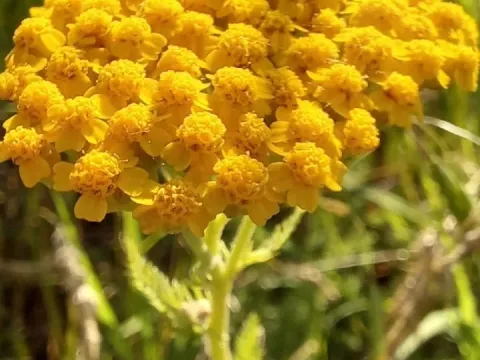
Achillea arabica
Achillea arabica
Sowing Achillea arabica is best performed in early spring or late autumn, ensuring the seeds benefit from natural stratification if planted before winter.
What the section contains
Achillea arabica
Given the tiny size of the seeds, they should be sown at a shallow depth of 0.5–1 cm, ideally with a light roller press to secure contact with the soil.
For industrial cultivation, a row-cropping method is standard, keeping distances of 45–60 cm to allow for efficient machine weeding and plant growth.
If utilizing greenhouse starters, seeds are sown in trays 6–8 weeks before the frost-free date, ensuring healthy seedlings for field transplantation.
Early-stage weed control is critical for this crop, as initial growth is slow and seedlings can easily be outcompeted by aggressive field weeds.
Achillea arabica is a resilient perennial belonging to the Asteraceae family, recognized for its ability to thrive in challenging environments and dry soils.
The plant demonstrates excellent drought tolerance, but requires full sun exposure to maximize the metabolic production of essential oils and active compounds.
Preferred soil types include well-drained, sandy or loamy soils with a neutral pH, as the crop is highly sensitive to waterlogged conditions that induce root rot.
Climate-wise, it prefers moderate temperatures and is well-adapted to continental climates with hot summers and moderate precipitation during the spring.
Soil fertility management is crucial; although it survives on poor soils, balanced fertilization with potassium and phosphorus helps maximize flower yield.
This crop is generally robust due to its natural phytochemical defense, but it remains susceptible to fungal issues if moisture levels are poorly managed.
Powdery mildew represents a primary threat during humid growing seasons, necessitating good spacing and airflow within the crop canopy to prevent outbreaks.
Insects like aphids and certain leaf-eating beetles can impact biomass quality, requiring careful monitoring during the early flower development stage.
Integrated pest management (IPM) is the preferred approach, focusing on biological controls to maintain the organic status of the medicinal raw material.
Proper crop rotation practices, avoiding other Asteraceae crops in sequence, are essential to mitigate soil-borne pathogens and long-term pest cycles.
Harvesting is executed during the peak flowering stage when the concentration of essential oil in the inflorescences is at its biological maximum.
Mechanical harvesting involves cutting the upper flower heads with a portion of the stem, ensuring the material remains free of heavy debris.
Rapid transport to the drying facility is mandatory to prevent enzymatic degradation and the loss of volatile compounds caused by spontaneous heating.
Drying occurs in climate-controlled conditions at temperatures not exceeding 40 degrees Celsius to preserve the therapeutic properties and color.
Once dried to a moisture content of approximately 10%, the raw material is processed, sifted to remove excess stems, and stored in light-proof containers.