
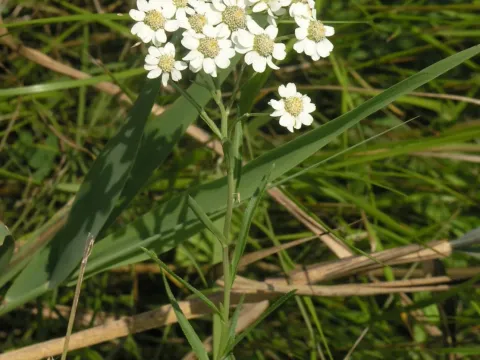
Achillea acuminata
Achillea acuminata
Sowing seeds of Achillea acuminata is most effectively done in late autumn or early spring as soon as soil temperatures reach 5–8 degrees Celsius. Seeds require a cold stratification period of about one month to break dormancy and ensure uniform germination.
What the section contains
Achillea acuminata
When sowing in spring, seeds should be placed at a shallow depth of 0.5–1 cm because they require light to germinate effectively. Planting in rows with 45–60 cm spacing provides enough space for mature plants to develop their root systems and foliage.
For those aiming for faster production in the first year, growing seedlings in a greenhouse is a viable option. Seedlings should be transplanted outdoors once the risk of spring frosts has completely passed, maintaining at least 30 cm between individual plants.
As a member of the Asteraceae family, Achillea acuminata is a robust perennial that can remain productive on the same plot for 5 to 7 years. Proper planning at the establishment stage ensures a long-lasting and profitable plantation.
Seedlings typically emerge within 14–20 days after sowing. During this period, it is essential to maintain consistent moisture in the top layer of the soil while ensuring the area is not waterlogged to prevent damping-off diseases.
This species thrives in sunny, open locations, as excessive shade leads to leggy growth and lower essential oil content. It is versatile regarding soil types but performs best in well-drained, fertile loams with a neutral or slightly acidic pH balance.
Adequate drainage is the most critical requirement, as the plant is highly susceptible to root damage caused by stagnant water during the winter months. Poorly drained sites are likely to result in significant plant losses during the dormant season.
Achillea acuminata is highly cold-hardy, as its natural distribution covers parts of East Asia and Siberia. It can withstand severe winter temperatures without additional protection, provided there is a stable snow cover in the growing region.
During summer droughts, supplementary irrigation is recommended, particularly during the flowering phase. However, the plant is naturally drought-tolerant once established due to its extensive and deep root system, which helps it access subsoil moisture.
Fertilizing should be done in early spring using a balanced mix that prioritizes potassium and phosphorus. Nitrogen applications should be kept moderate to avoid overly lush growth, which can reduce the concentration of secondary metabolites in the harvested leaves.
Yield capacity depends heavily on the age of the plantation and soil quality, with peak productivity occurring during the second and third years. Harvesting should take place at the onset of mass flowering to capture the highest levels of active compounds.
Under intensive management with consistent moisture levels, farmers may be able to achieve multiple harvests per season. The first cutting is usually done in mid-summer, while the second harvest occurs in early autumn, depending on climate conditions.
The economic value of this crop is tied to its medicinal properties, specifically the unique flavonoids and essential oils found in the aerial parts. These components are in demand by the pharmaceutical industry for their anti-inflammatory applications.
To ensure long-term vitality, it is advisable to allow some plants to go to seed every few years. This encourages self-seeding, which helps maintain the desired plant density across the plot without the need for manual replanting.
Post-harvest processing is critical for maintaining quality. The raw material must be dried in shaded, well-ventilated structures at temperatures not exceeding 40 degrees Celsius to preserve the volatile essential oils that give the herb its value.
Common pests include aphids and certain leafhoppers that often cluster on the soft tips of flowering shoots during hot, dry spells. Biological control methods are preferred to maintain the organic standards often required for medicinal herbal products.
Diseases such as powdery mildew and various foliar spots can occur in humid, stagnant air conditions. Proper row spacing and mechanical weeding are the best preventative measures to ensure good airflow throughout the plant canopy.
Root rots are frequently associated with waterlogged soil. This is a severe threat that is often difficult to detect until the plant starts to wilt. Preventing water buildup is the most effective way to protect the integrity of the root system.
Weed management is vital during the first year of establishment. Once the plants reach maturity, they become quite competitive and can naturally suppress the growth of most annual weeds in the surrounding area.
In the event of localized infections, affected plant tissues must be removed immediately and cleared from the field. This sanitation process prevents the spread of pathogens to healthy plants and maintains the overall health of the crop.
Harvesting should only be performed during dry weather, ideally in the morning after the dew has evaporated. Stems should be cut at a length of 30–40 cm, selecting the succulent upper growth while discarding the woody lower stems.
Harvested material must be transported to the drying facility quickly to prevent heating or fermentation. Using ventilated crates during transportation helps maintain the quality and appearance of the raw plant material.
On smaller farms, manual harvest with shears is the most efficient method, allowing the operator to select only the cleanest stems. On larger commercial plantations, tractor-mounted mowers adjusted to the correct height can streamline the harvest process.
Since the plant is capable of rapid regrowth after being cut, scheduling the harvest correctly allows for sufficient time for the plants to store energy before winter. Proper timing ensures that the plantation remains productive for many years.
High-quality dried products will retain a natural greenish hue and a distinct, pleasant aroma. Storage should be in cool, dark, and dry conditions to prevent the degradation of light-sensitive and volatile chemical compounds within the dried herb.