
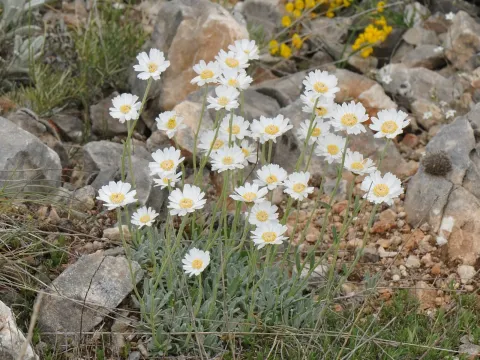
Achillea ageratifolia
Achillea ageratifolia
Sowing seeds of Achillea ageratifolia is typically carried out in the spring, from March to April. To obtain high-quality seedlings, containers with a light, well-draining substrate are used, maintaining germination temperatures between 18 and 20 degrees Celsius.
What the section contains
Achillea ageratifolia
In regions with mild climates, late-autumn sowing directly into open ground is possible. The seeds require stratification to increase germination energy, which is especially relevant when using seed material from northern populations of this species.
When propagating by division, the procedure should be performed in early spring or late summer when the plant is in a phase of relative dormancy. This allows the culture to root better before the onset of harsh frosts or intense summer heat.
When planting seedlings in a permanent location, a planting scheme must be followed to provide enough space for the development of a compact rosette of leaves. The distance between specimens should be at least 20-30 centimeters to ensure adequate aeration.
Young plants require regular watering in the first weeks after transplanting until their root system adapts to the soil conditions of the site. Subsequently, watering is significantly reduced, as the culture possesses high drought tolerance.
Achillea ageratifolia belongs to the Asteraceae family and is a perennial herbaceous plant with characteristic silver pubescence on its leaves. In nature, it originates from the regions of the Balkan Peninsula, preferring rocky slopes and limestone outcrops.
The culture is extremely demanding regarding light and should be grown exclusively in open, sunny areas. In partial shade, the plant quickly loses its compact form, stretches, and loses the decorative silver coloration of its leaves.
Soils for successful cultivation must have excellent drainage properties, as water stagnation is fatal to the root system. Ideal options are dry, nutrient-poor limestone or gravelly substrates.
Regarding climatic conditions, the plant is adapted to both mountainous and moderate lowland zones. It demonstrates high resistance to low winter temperatures, provided that waterlogging is avoided during the spring snowmelt period.
The agrotechnique of the plant is minimal: it does not require frequent fertilization, as an excess of nutrients provokes loose growth and reduces winter hardiness. Periodic removal of faded inflorescences is sufficient to maintain a tidy appearance.
The primary danger for Achillea ageratifolia is root rot, which occurs due to excessive moisture and heavy soil structure. Symptoms include darkening of the root collar and general wilting of the bush, even with sufficient watering.
In dense planting conditions, powdery mildew may occur, especially during periods of high humidity and frequent fluctuations between day and night temperatures. For prevention, it is necessary to maintain intervals between plants and avoid overhead irrigation.
Among pests, aphids are the most frequently encountered, colonizing young flower stalks during the active growing season. Their activity can lead to deformation of inflorescences and general weakening of the plant, requiring the use of systemic insecticides.
Sometimes signs of leaf beetle or weevil activity may be found on leaves, although large-scale infestations are not characteristic of this culture. Regular visual inspection of the plants allows for the timely containment of pest breeding sites.
To prevent the spread of infections and pests, it is crucial to remove damaged plant parts in a timely manner and maintain cleanliness in the root zone, preventing the accumulation of plant debris that creates conditions for pathogen overwintering.