
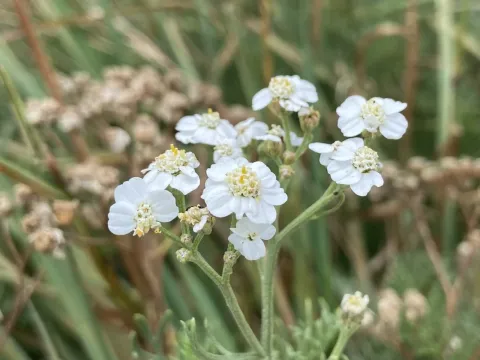
Achillea abrotanoides
Achillea abrotanoides
Sowing of Achillea abrotanoides is primarily carried out in the spring period, once the soil has warmed to a temperature of 10–12 degrees Celsius. Late autumn sowing is also permissible in regions with a temperate climate, allowing seeds to undergo natural stratification.
What the section contains
Achillea abrotanoides
The plant's seeds are very fine, so they must be sown shallowly, no deeper than 0.5–1 cm. To ensure uniform germination, it is recommended to lightly roll the soil after sowing, providing close contact between the seeds and the substrate.
Optimal stand density is achieved by maintaining row spacing between 45 and 60 cm, which allows for mechanical cultivation throughout the plant's growing season.
When propagating via seedlings, seeds are sown in greenhouses during March, followed by transplanting hardened seedlings into open ground in May. This method allows for more developed plants within the first year of growth.
A crucial factor during sowing is selecting a plot free from aggressive perennial weeds, as Achillea abrotanoides develops quite slowly in its initial growth phase and can be suppressed by invasive vegetation.
Achillea abrotanoides is a light-loving crop that prefers open, well-lit sites. Under shaded conditions, the essential oil content in the plant's biomass decreases significantly, which negatively impacts the quality of the raw material.
The plant has moderate soil fertility requirements, though it thrives best in light, sandy or loamy soils with a neutral or slightly alkaline pH level.
The crop is highly drought-tolerant, owing to the structural features of its root system and the pubescence of its leaves, which reduces transpiration. Excessive moisture and waterlogging are detrimental to the plant, causing root neck decay.
In regions with cold winters, the species demonstrates sufficient winter hardiness, although in snowless winters with extreme temperatures, light organic cover may be required to protect the basal rosettes.
The optimal temperature range for active growth is 20–25 degrees Celsius. The plant tolerates sharp diurnal temperature fluctuations well, which is typical for the foothill and steppe regions of its natural habitat.
The biomass yield of Achillea abrotanoides depends on the agronomic background and plant density. On average, when best practices are followed, one hectare can produce between 8 to 15 tonnes of raw biomass per season.
The yield of essential oil is a key productivity indicator when growing the crop for pharmaceutical or perfume purposes. The oil content varies from 0.5% to 1.2% of dry matter, depending on the developmental phase.
Maximum productivity is observed in the second and third years after sowing, when the plants have fully developed and reached the peak of their vegetative activity.
With systematic application of mineral fertilizers (primarily nitrogen at the start of the season), the yield of aerial parts can increase by 20-30% without compromising the quality of accumulated biologically active substances.
To maintain high productivity, it is recommended to cultivate the crop on the same site for no more than 5–6 years, after which productivity declines and rotation to new plots becomes necessary.
The most common diseases are fungal infections such as powdery mildew and rust, which develop in conditions of high air humidity and poor ventilation within the crop canopy.
Root rots pose a danger in heavy, waterlogged soils. Control measures include adhering to crop rotation and improving soil drainage characteristics.
Among pests, aphids and spider mites can cause the most significant damage by feeding on the juices of young shoots. Biological insecticides are used to control insect populations.
Thrips and weevils may damage inflorescences, which is particularly critical if the goal is to obtain seed material for further propagation.
Disease prevention includes timely weed removal, as weeds often act as reservoirs for infection, and ensuring sufficient spacing between plants for adequate air circulation.
The medicinal raw material of Achillea abrotanoides is harvested during the phase of mass flowering, when the concentration of essential oils and flavonoids in the inflorescences and upper stems reaches its peak.
The plants are cut mechanically or by hand at a height of 10–15 cm above the soil surface. It is important to avoid including coarse lower stems in the harvest, as they reduce the quality of the final product.
Immediately after harvesting, the raw material must be transported to a drying zone or processing facility. Delays in drying lead to self-heating of the biomass and the loss of volatile biologically active compounds.
Drying is carried out in well-ventilated, shaded areas or specialized dryers at temperatures not exceeding 40–45 degrees Celsius to preserve the natural color and chemical composition.
Once dried, the raw material is cleaned of impurities and sorted. The finished product must be stored in dry, dark, and cool premises, protected from moisture and pests.