

Reference · Crops
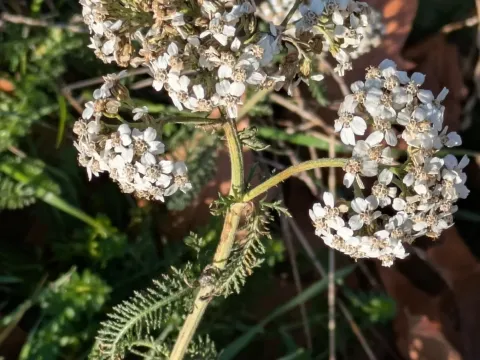
Yarrow
Achillea L.
Yarrow is a hardy perennial belonging to the Asteraceae family. In agricultural practice, seeds are typically sown during the spring once the threat of heavy frost has passed to ensure consistent germination rates.
10
items
What the section contains
 Alpine yarrow
Achillea alpina L.
Alpine yarrow
Achillea alpina L.
 Alpine yarrow
Achillea alpina L. x Achillea millefolium L.
Alpine yarrow
Achillea alpina L. x Achillea millefolium L.
 Fernleaf yarrow
Achillea filipendulina Lam.
Fernleaf yarrow
Achillea filipendulina Lam.
 Hill yarrow
Achillea collina Becker ex Rchb.
Hill yarrow
Achillea collina Becker ex Rchb.
 Hybrid of common yarrow and woolly yarrow
Hybrids between Achillea millefolium x Achillea tomentosa
Hybrid of common yarrow and woolly yarrow
Hybrids between Achillea millefolium x Achillea tomentosa
 Silver yarrow
Achillea clavennae L.
Silver yarrow
Achillea clavennae L.
 Sneezewort yarrow
Achillea ptarmica L.
Sneezewort yarrow
Achillea ptarmica L.
 Umbel yarrow
Achillea umbellata Sm.
Umbel yarrow
Achillea umbellata Sm.
 Woolly yarrow
Achillea tomentosa L.
Woolly yarrow
Achillea tomentosa L.
 Yarrow
Achillea millefolium L.
Yarrow
Achillea millefolium L.
Marketplace
Products in this section · 7


Yarrow
Because yarrow seeds are extremely small, they require light for germination and should be sown onto the surface of the soil with minimal coverage. A light pressing with a roller ensures good seed-to-soil contact without burying them too deeply.
Soil preparation should involve deep tillage in the autumn to create a fine tilth, which is essential for uniform establishment. The rows are typically spaced 45–60 centimeters apart to allow for proper airflow and mechanized maintenance throughout the season.
During the first year, the plant focuses on developing a basal rosette of leaves and a robust root system. Growth is notably slow initially, requiring careful weed control to prevent competition from more aggressive plant species during the establishment phase.
By the second year, the crop transitions to its reproductive phase, producing tall, flowering stalks. Proper planting density is critical to ensure that the plants have sufficient space to reach their full potential and maximize secondary metabolite production.
Yarrow is highly adaptable to various climatic conditions, thriving in temperate zones across the globe. It is known for its remarkable drought tolerance, which makes it a sustainable crop for regions with fluctuating water availability.
The plant performs best in full sun, as light intensity is directly correlated with the concentration of essential oils in the flowers and leaves. Sites should have well-draining soil, ranging from sandy loams to heavier clays, provided drainage is adequate.
While yarrow can grow in nutrient-poor soils, modest nitrogen and phosphorus fertilization during the vegetative stage can significantly boost biomass production. It is sensitive to soil waterlogging, which can cause root rot and decrease plant vitality.
An optimal soil pH for cultivation ranges from 6.0 to 7.5. Adjusting the soil chemistry through liming on acidic sites can improve overall plant health and increase the yield of active pharmaceutical ingredients.
The crop is highly valued in the pharmaceutical, cosmetic, and livestock feed industries. Its resilience and medicinal properties make it an attractive option for integrated pest management and sustainable farming systems.
Powdery mildew and various rust fungi are the most prevalent diseases affecting yarrow, particularly in high-humidity climates. Maintaining proper row spacing is the most effective preventative measure to ensure good air circulation.
Pests such as aphids and leaf-feeding beetles can cause localized damage to the foliage and buds. Integrated pest management strategies, including the use of beneficial insects, are preferred over chemical treatments to maintain product purity.
Root rot is usually an indicator of poor soil drainage or excessive irrigation. Improving soil structure through the addition of organic matter or sub-soiling can alleviate these issues and prevent future outbreaks of soil-borne pathogens.
Crop rotation is essential for long-term health, as it prevents the buildup of pathogens in the soil. Moving yarrow to a new field every 5 to 7 years helps keep the plantation vigorous and less susceptible to environmental stresses.
Regular monitoring of the fields during the peak growing season allows for early detection of potential outbreaks. Removing and destroying heavily infested plants immediately can prevent the spread of disease across the entire harvest area.
Harvesting should occur during the full bloom phase, which is when the active compounds reach their peak concentration. Timing is critical, as collecting too early or too late can result in lower medicinal potency.
The flower heads are harvested with a small portion of the upper stem using specialized mowing equipment. The cutting height is set to ensure only the highest-quality plant material is collected, minimizing unwanted stem fibers.
Rapid post-harvest drying is required to prevent moisture-related degradation or fermentation of the plant material. Drying is conducted in controlled environments at temperatures not exceeding 45 degrees Celsius to preserve volatile oils.
Once dried, the yarrow is sorted and cleaned to remove impurities, such as dust, soil, or foreign plant matter. Quality control assessments ensure the final product meets established pharmacological standards for commercial use.
Final storage involves keeping the processed material in dry, light-proof containers. This ensures the stability of the active ingredients and maintains the high quality of the crop for the duration of its shelf life.