
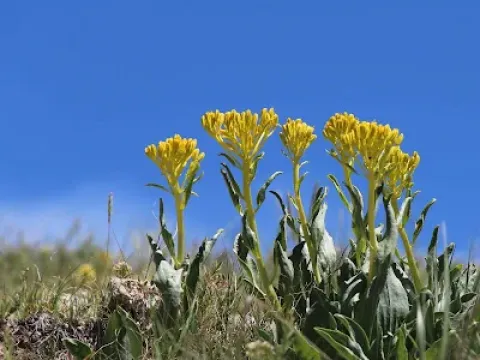
Yermo
Yermo
Yermo (Yermo xanthocephalus) is an extremely rare, monotypic genus of flowering plants. Given its status as an endangered species found only in restricted areas of Wyoming, it is not an agricultural crop and is not cultivated for commercial purposes.
What the section contains

Yermo
The natural life cycle of Yermo does not involve conventional sowing techniques. Seeds germinate in the wild in response to specific moisture and temperature cues provided by the mountain spring season, often in gravelly substrates.
Research into the propagation of this species is conducted exclusively for conservation purposes by botanical institutions. There are no available cultivation guidelines, as the plant depends heavily on the specific soil microbiome of its native habitat.
The cultivation of Yermo xanthocephalus outside its native range has proven to be exceptionally difficult due to the specialized environment it requires. Artificial germination requires precise mimicry of the high-altitude, cold-desert conditions.
Because the plant is under strict conservation oversight, it is illegal and biologically impractical to attempt to sow it outside of protected study areas. Protection of the natural seed bank remains the priority for its survival.
Yermo belongs to the Asteraceae family and is a specialized endemic. It is perfectly adapted to the thin, nutrient-poor, alkaline soils that have developed from specific geological formations in its native range.
The plant requires extreme drainage. Waterlogging is catastrophic for the root system, which is adapted to thrive in well-aerated, rocky soils where nutrient levels are naturally low and competitive pressure from other flora is minimal.
Full sun exposure is a fundamental requirement for the development of the plant. Its physical form is short and compact, an evolutionary strategy to withstand the high-velocity winds prevalent in the Wyoming desert environment.
The climatic conditions are characterized by arid, cold-desert patterns with significant daily temperature fluctuations. Yermo xanthocephalus survives in these harsh settings by entering periods of dormancy when conditions become too extreme.
Soil chemistry is critical for this species. Any alteration in soil pH or composition caused by external inputs could lead to the demise of the plant, as it has not evolved to cope with high nutrient concentrations or soil amendments.
The primary threat to the survival of the Yermo plant is the fragmentation of its limited habitat. Activities such as mining, road construction, and livestock grazing have significantly reduced the quality of its niche.
Invasive weed species pose a significant threat by competing for limited space and water. As environments change, non-native plants may colonize the area, leaving Yermo xanthocephalus unable to compete for resources.
Climate change and shifts in the regional precipitation patterns are major concerns. The plant relies on predictable seasonal patterns for germination, and any shift in the moisture regime could prevent new generations from establishing.
The species is also at risk due to its very small, isolated population size. This low genetic diversity makes it more susceptible to potential diseases and less resilient to environmental shifts over time.
Mechanical damage from trampling is a constant threat in areas where there is public land use. Protecting these fragile patches of land is essential to ensuring that Yermo does not face extinction in the near future.