
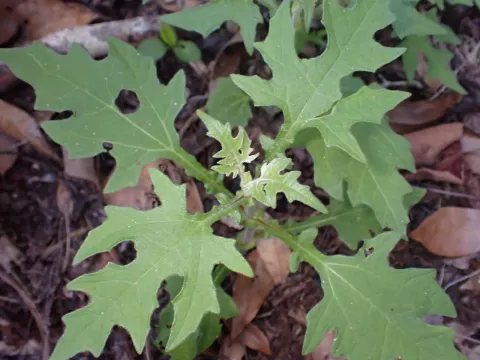
Yacon
Smallanthus
Yacon is a perennial plant, but in most agricultural regions outside its native range, it is cultivated as an annual crop due to its sensitivity to frost.
What the section contains

Yacon
The plant is typically propagated vegetatively by dividing the rhizomes, which are sprouted in greenhouses or warm indoor environments before being moved outdoors.
Planting in the open field should only occur once the risk of spring frost has completely passed, as the plant's succulent stems are extremely vulnerable.
Using started transplants can significantly extend the growing season, which is crucial for the optimal development of the storage roots later in the year.
The rhizomes should be planted at a moderate depth, ensuring that the buds have sufficient contact with moist soil to encourage rapid root establishment.
Yacon, belonging to the Asteraceae family, is native to the Andean highlands and thrives in moderate temperatures and high-altitude conditions.
The crop requires fertile, well-drained, and light soil; sandy loams rich in organic matter are ideal for achieving the best root expansion and quality.
Consistent moisture is vital throughout the growing period, particularly during the root-bulking stage, though waterlogging must be avoided to prevent rot.
The plant prefers full sun and needs a relatively long growing season to produce a substantial yield, as it is a photoperiod-sensitive species.
Temperatures between 18 and 25 degrees Celsius are considered optimal for vegetative growth, while excessive heat can sometimes stress the plants.
Yacon can produce high yields under favorable conditions, with a single plant capable of producing several kilograms of edible storage roots.
The harvestable portion consists of large, tuberous roots that are rich in fructooligosaccharides, making them a popular natural health food ingredient.
Yield is highly dependent on spacing and soil fertility; proper management of these factors allows for the maximum accumulation of biomass in the roots.
Consistent care during the peak growing months significantly correlates with the final root mass and the overall sugar content of the harvest.
Commercial producers should select high-yielding cultivars to ensure consistent quality and profitability throughout the agricultural cycle.
The plant is generally hardy, but it can be susceptible to soil-borne pests such as wireworms and cutworms that feed on the tuberous roots.
Over-irrigation in poorly drained soils increases the risk of fungal pathogens, which can cause significant decay in the rhizomes and edible tubers.
Slugs and snails often pose a challenge during the early stages of growth, requiring careful monitoring and integrated pest management strategies.
Maintaining good field hygiene and practicing crop rotation are essential practices to minimize the buildup of soil pathogens and harmful insects.
Diseases like root rot are usually managed by providing adequate drainage and ensuring that the planting area does not suffer from prolonged water saturation.
Harvesting usually takes place in late autumn after the foliage begins to wither or frost strikes, signaling the cessation of vegetative growth.
Great care must be taken during extraction to avoid bruising or breaking the brittle roots, as mechanical damage leads to rapid spoilage during storage.
After harvest, the tubers should be dried briefly in the shade to help toughen the skin, which enhances their storage life in cool, humid environments.
Proper storage involves keeping the roots in a dark, cool place with high humidity, often packed in dry sand or crates to prevent dehydration.
Yacon is versatile in its use, ranging from direct consumption as a crisp, sweet snack to industrial extraction of inulin for the dietary supplement market.