
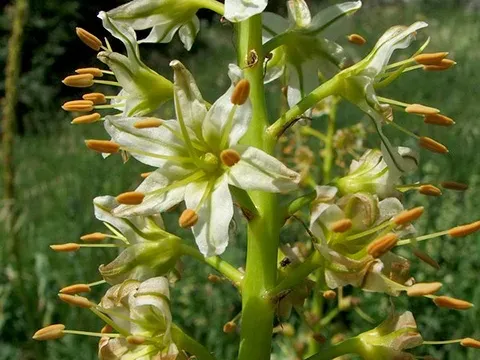
Eremurus tauricus
Eremurus tauricus
Sowing seeds of Eremurus tauricus is typically performed in late autumn for outdoor germination. The seeds require a long period of cold stratification to break dormancy and ensure uniform emergence.
What the section contains
Eremurus tauricus
For spring sowing, seeds must be stratified in a controlled environment at low temperatures for several months. They should be planted at a shallow depth of 1–2 centimeters to provide proper oxygenation.
Seedlings develop slowly, spending their first years forming only a basal rosette of leaves. The plants usually reach their full flowering stage between the fourth and seventh year of growth.
Propagation through root division is the preferred method for garden maintenance. This process is carried out during the summer dormancy period when the foliage has completely withered.
Great care must be taken during division to avoid breaking the fleshy, radial roots. Each division must include a viable growth bud to ensure the plant successfully establishes itself in a new location.
Eremurus tauricus is a herbaceous perennial belonging to the Asphodelaceae family. It is native to the Crimean region, thriving in well-drained, rocky slopes and mountain steppes.
The primary requirement for this culture is excellent drainage. Stagnant water, especially during winter and spring, is fatal to the fleshy root system, causing rapid decay and death of the plant.
This species is a heliophyte, meaning it requires full, direct sunlight to flourish. Partial shade causes the plants to etiolate, making them weak and significantly reducing their flowering potential.
The climate should feature moderately dry summers and cool winters. The plant is adapted to drought but is sensitive to excessive atmospheric moisture, which can trigger fungal diseases.
In regions with harsh winters, a protective layer of mulch, such as dry peat or pine branches, is essential. This protects the crown and growth buds from severe freezing temperatures.
The most significant threat to Eremurus is root rot, triggered by waterlogged soil. Once infected, the plant loses its vitality and the succulent roots become mushy and unusable.
Aphids and thrips are common pests that attack the flower spikes during the active growing phase. These pests weaken the plant, leading to deformed blossoms and diminished ornamental value.
Subterranean pests like moles or mole crickets can cause structural damage to the root system. Using physical barriers, such as metal mesh, during planting can effectively protect the tubers.
Prevention involves maintaining high soil aeration and avoiding excessive irrigation. Proper spacing between plants is crucial to ensure good air circulation and lower humidity around the foliage.
If infection is spotted, affected roots should be removed immediately, and the surrounding area should be treated with appropriate fungicides. Early detection is key to preserving the specimen.
Eremurus tauricus is cultivated primarily for ornamental purposes. Its spectacular, candle-like inflorescences make it a focal point in landscaping projects and professional garden design.
Flower spikes are suitable for cut flower arrangements. They are typically harvested when about half of the florets are open, ensuring a long shelf life and consistent beauty in vases.
For relocation or propagation, the root systems are harvested during the dormancy stage. After excavation, the tubers should be cleaned of soil and stored in a cool, dry place to prevent rot.
After the blooming season, it is recommended to cut back the spent flower stalks. This allows the plant to redirect its energy reserves into the roots for the development of next year's buds.
With correct agricultural practices, Eremurus tauricus remains a reliable and long-lasting perennial. Its ability to thrive in dry conditions makes it an excellent choice for modern xeriscaping.