
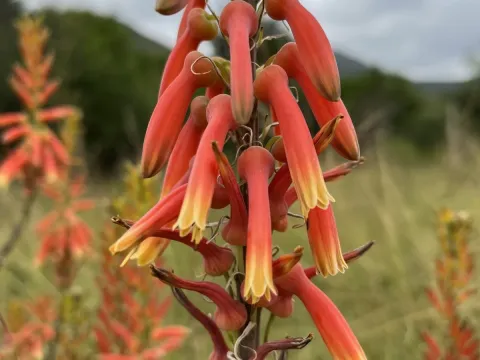
Foster's Aloe
Aloe fosteri
Aloe fosteri is a succulent perennial plant belonging to the Asphodelaceae family. It is native to the Mpumalanga province in South Africa, where it thrives in rocky environments and open grasslands, showcasing a high degree of adaptation to arid conditions.
What the section contains
Foster's Aloe
The plant is distinctively recognized by its basal rosette of spotted leaves. These spots are arranged in irregular transverse bands, creating a visually striking pattern. The leaves are firm and succulent, designed to store water during prolonged dry spells in their natural habitat.
Successful cultivation requires a gritty, well-draining soil mix that prevents water accumulation. In agricultural practice, the substrate should consist of coarse sand, perlite, and a small portion of organic matter to mimic the natural rocky soil conditions of the species.
This crop demands high light intensity to maintain its characteristic coloration and growth habit. While it can tolerate partial shade, insufficient light will lead to etiolation, making the rosette lose its compact shape and structural integrity.
Temperature management is crucial; the plant requires a warm growing season and a cooler resting period during winter. It is frost-sensitive and must be protected from freezing temperatures, making it suitable for glasshouse cultivation in temperate climates.
The most significant threat to Foster's Aloe is root rot caused by overwatering. Excess moisture in the root zone leads to the rapid proliferation of soil-borne fungi, which can compromise the plant's vascular system and cause total collapse.
Common pests include mealybugs and scale insects. These pests often congregate at the base of the leaves, feeding on plant sap and weakening the specimen. Early detection and treatment with specialized systemic insecticides are essential for maintaining plant health.
Poor airflow within growing facilities can increase the incidence of powdery mildew and other fungal leaf infections. Maintaining good ventilation is a vital prophylactic measure to ensure the epidermis of the leaves remains intact and healthy.
Mechanical injuries to the leaves serve as entry points for bacterial infections. Care should be taken during handling and maintenance tasks to avoid bruising or tearing the foliage, as these wounds heal slowly and are prone to necrosis.
Routine monitoring of the plants, particularly during the transition between the growth and dormancy periods, helps in early identification of pest infestations. Maintaining high hygiene standards in the greenhouse environment significantly reduces the risk of recurring problems.