
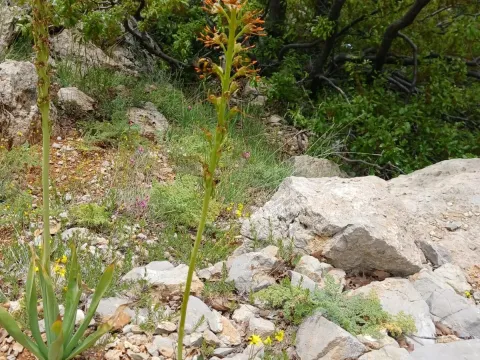
Eremurus spectabilis
Eremurus spectabilis
Eremurus spectabilis is a striking perennial plant belonging to the Asphodelaceae family, native to the mountainous regions of Central Asia. Propagation is typically achieved through seeds or by dividing the tuberous roots during the plant's dormant phase.
What the section contains
Eremurus spectabilis
Seed sowing is best performed in late autumn, allowing the seeds to undergo natural stratification throughout the winter. Seeds should be planted at a shallow depth of about 2 centimeters in a well-prepared seedbed with excellent drainage to ensure successful germination in the spring.
Vegetative propagation is considered more efficient for gardeners. It involves carefully separating the fleshy roots when the foliage has completely died back in late summer. Each division must retain a portion of the basal plate and a viable growth bud to ensure future development.
Seedlings grow slowly, often taking four to five years to reach maturity and produce their first flowering spikes. For this reason, nursery production often focuses on dividing existing clumps to maintain the genetic integrity and shorten the time to bloom.
Once the division is performed, the rhizomes should be replanted immediately into warm, dry soil to prevent desiccation of the roots. Proper spacing is essential, as the plants grow into large clumps over several years and require adequate airflow.
The Eremurus spectabilis thrives in full sun, requiring an environment where it can receive at least 6 to 8 hours of direct light daily. Lack of sunlight results in weak stems that tend to flop and significantly reduces the plant's potential for high-quality flower production.
Soil quality is paramount for this species; it requires very light, sandy, and well-draining soil. These plants are highly susceptible to root rot if they are kept in waterlogged or heavy clay soils, which prevent adequate gas exchange in the root zone.
A neutral to slightly alkaline pH is ideal for promoting healthy growth. If the local soil is too acidic, amending it with lime or crushed limestone before planting is recommended to provide the necessary mineral balance for optimal nutrient uptake.
One of the most critical aspects of care is the summer dormancy period. After flowering and subsequent foliage senescence, the soil must remain dry to allow the tuberous roots to bake in the sun, which mimics the natural conditions of their native steppe environment.
While hardy, young plants may benefit from protective mulch in regions with extreme winter temperatures. However, this mulch must be removed early in the spring to ensure the soil warms up quickly, preventing rot during the snowmelt season.
Fungal diseases are the primary threat to the health of Eremurus spectabilis, particularly in regions with high spring rainfall. Root rot and collar rot are common occurrences, often caused by stagnant water or poor drainage around the fleshy root system.
Rust disease can affect the foliage, manifesting as orange-brown pustules that reduce the photosynthetic efficiency of the plant. Maintaining adequate spacing between plants and ensuring good air circulation is a vital cultural practice to minimize the risk of infection.
Pests such as aphids and thrips can cause significant damage to the developing flower spikes, resulting in stunted or deformed growth. Regular monitoring during the active growth phase allows for early intervention with mild insecticides or horticultural oils.
Subterranean pests, including various beetle larvae, can feed on the root storage organs, causing internal damage that makes the plant susceptible to secondary bacterial infections. Soil disinfection or preventative treatments may be necessary in infested areas.
General hygiene, such as removing all dead plant material after the growing season, is essential for pest management. This practice reduces the survival rate of pathogens and insect eggs that would otherwise overwinter in the garden soil.