
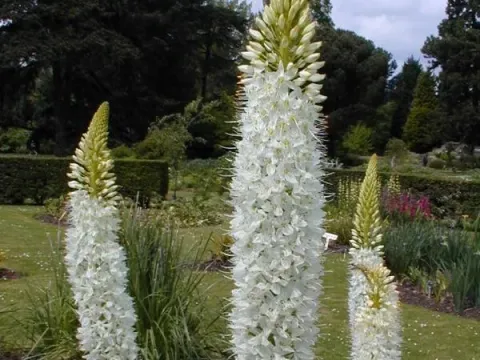
Eremurus himalaicus
Eremurus himalaicus
Sowing seeds of Eremurus himalaicus is typically performed in late autumn, allowing the seeds to undergo natural stratification throughout the winter months. For container-based propagation, seeds require a long period of cold treatment, so planning should begin in late winter to ensure proper germination.
What the section contains
Eremurus himalaicus
Given the slow growth rate from seeds, vegetative propagation by dividing the tuberous roots is the standard method for most growers. The roots should be carefully planted in late summer or early autumn during the dormancy period, at a depth of 10 to 15 centimeters.
When selecting a site, remember that Eremurus is a long-lived perennial that does not like frequent disturbance. The planting scheme must allow for adequate spacing between individual plants to prevent overcrowding and ensure healthy airflow between the large foliage.
The soil must be completely cleared of perennial weeds before planting, as Eremurus seedlings are poor competitors. Adding coarse sand to the base of the planting hole is a recommended practice to improve drainage and reduce the risk of root rot during the dormant season.
Patience is essential, as seeds may take several years to bloom. Maintaining consistent moisture in the substrate during the initial stages is critical for germination, but it must be balanced with careful monitoring to avoid rotting the sensitive embryo.
Eremurus himalaicus, a member of the Asphodelaceae family, originates from the mountainous regions of the Himalayas. In its natural habitat, it thrives in well-lit, open slopes, requiring a position that receives full sun exposure throughout the day for optimal growth.
The species has specific soil requirements: it strictly demands excellent drainage. Water stagnation is the primary cause of plant death, so loose, sandy, or stony loams with a neutral to slightly alkaline pH are considered ideal for successful cultivation.
While the plant is hardy enough to survive some frost, it requires protection from excessive moisture during winter. In cold climates, mulching or covering the root zone with pine branches can provide the necessary insulation against extreme winter temperatures.
During the active growing season in spring, moderate watering is beneficial. However, once the foliage dies back in the summer, the soil must remain dry to facilitate the plant's natural dormant cycle, which is essential for bud development for the following year.
Fertilization should be applied in stages, using organic matter in early spring to support leaf growth and phosphorus-potassium fertilizers during the bud-forming stage to ensure large, healthy inflorescences and structural integrity.
The most significant threat to Eremurus himalaicus is fungal disease caused by overly damp soil conditions. Root rot is particularly destructive and can lead to rapid decline; thus, maintaining soil health and proper moisture regulation is of paramount importance.
Common pests include wireworms and various larvae that feed on the tuberous roots, causing severe damage. Integrated pest management, including the early use of targeted insecticides, can help keep pest populations at bay and preserve the root system.
Foliage may occasionally fall victim to rust, identifiable by discolored spots on the leaves. Promptly removing the infected parts and treating the plant with copper-based fungicides is usually sufficient to contain the spread of the pathogen.
Aphids can colonize the spikes during the active bloom period, draining sap and potentially spreading viral infections. Routine inspection and the application of mild contact insecticides are effective strategies to prevent heavy infestations.
Good hygiene in the garden, including regular cleaning of weeds and debris, is the best preventative measure. Frequent monitoring of root condition during transplanting allows for the early detection and treatment of potential problems.
Harvesting tuberous roots for propagation or relocation is best carried out in late summer, once the foliage has completely withered and turned yellow. At this stage, the plant is in deep dormancy, which significantly reduces the shock to the root system.
Extraction should be performed with extreme care, as the roots are brittle and prone to snapping. Any mechanical damage must be treated with crushed charcoal or a fungicide to prevent rot during the drying and storage process.
After harvesting, roots should be cleaned, disinfected in a mild solution, and dried in a shaded, well-ventilated location. They should be stored in dry peat or sand at temperatures between 15-18 degrees Celsius until the next planting season.
For commercial cut flower production, spikes are harvested when approximately one-third of the florets have opened. This timing ensures the best display longevity and keeps the product in prime condition for the market.
Recovering the plant's strength after harvest is crucial for sustained production. Limiting the frequency of harvests from a single plant helps preserve its energy reserves, ensuring that the Eremurus continues to provide high-quality blooms for many years.