
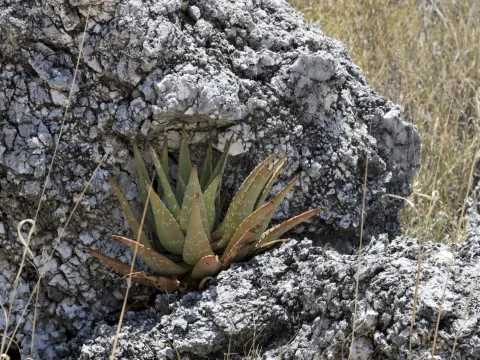
Edible aloe
Aloe esculenta
Aloe esculenta, a member of the Asphodelaceae family, is a succulent plant native to the arid landscapes of Namibia and Botswana. Its name reflects its historical utilization in regional diets, where certain parts of the plant are harvested by local populations.
What the section contains
Edible aloe
The plant thrives in full sun conditions, requiring high light intensity to maintain its structural integrity and metabolic activity. Unlike many other crops, it is exceptionally adapted to poor, calcareous, and rocky soil types, making it a specialized candidate for xerophytic agriculture.
Proper drainage is the single most critical factor for successfully growing this species. In cultivation, the substrate should mimic its native environment, consisting of mineral-heavy mixtures, such as gravel or pumice, which ensure rapid water runoff to protect the root system.
As a drought-tolerant species, Aloe esculenta exhibits high water-use efficiency. It requires a significant period of dryness between watering cycles. Over-irrigation is the primary cause of plant failure, leading to rapid tissue breakdown and susceptibility to soil-borne pathogens.
Temperature management is crucial, as the plant cannot withstand frost or prolonged exposure to high humidity combined with low temperatures. Greenhouse cultivation requires a climate that mimics the stable, warm temperatures of its southern African origin to prevent physiological damage.
The primary threats to Aloe esculenta include root rot and stem decay caused by Pythium and Rhizoctonia fungi, usually resulting from inadequate soil aeration or over-watering. Soil sanitation is essential to mitigate these risks in commercial setups.
In terms of insect pests, mealybugs are a significant threat as they feed on the sap and hide in the leaf axils. Integrated pest management strategies, focusing on early detection and targeted biological or chemical treatments, are recommended to maintain plant health.