
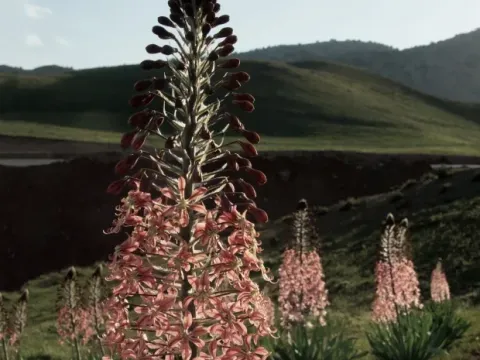
Eremurus albertii
Eremurus albertii
Eremurus albertii belongs to the Asphodelaceae family. This perennial herbaceous plant is known for its unique root system consisting of fleshy, radiating storage roots that support growth.
What the section contains
Eremurus albertii
Vegetative propagation is the most efficient method for this species. It involves carefully dividing the root clusters during the summer dormancy period when the foliage has died back.
Growing from seeds is a long-term process, taking several years for the plant to reach maturity and produce its first impressive inflorescence.
Seeds require a period of cold stratification to break dormancy. Sowing can be performed outdoors in autumn to allow winter temperatures to initiate the germination process.
When planting, ensure that the crown of the root system is placed at the appropriate depth, usually just below the surface, to prevent frost damage while allowing growth.
Native to the mountain regions of Central Asia, Eremurus albertii thrives in full sun. It requires a location with maximum exposure to light to develop its signature tall, spike-like flowers.
Well-draining soil is the most critical requirement for success. The species is highly susceptible to root rot if water lingers around the roots for extended periods.
The plant demands a distinct dry summer dormant period. Providing a warm, dry environment during this phase is essential for the plant to survive and bloom in subsequent years.
Although it is relatively hardy, providing a layer of mulch in cold climates can protect the crown from extreme temperature fluctuations during the dormant winter months.
The soil should have a neutral to slightly alkaline reaction. If the garden soil is heavy, adding grit, gravel, or coarse sand is necessary to create the required porosity.
Fungal pathogens are the primary threat, especially in areas with high soil moisture. Root rot is a common issue that often leads to the total loss of the plant.
Pests such as aphids and thrips can infest the succulent foliage and flower buds, weakening the plant and potentially distorting the development of the inflorescence.
Small rodents can pose a danger by feeding on the storage roots during winter. Protective wire mesh cages are often used by gardeners to prevent such damage.
Virus infections transmitted by insects can cause mosaic patterns on the leaves. Managing insect populations is key to preventing the spread of these problematic diseases.
Maintaining proper hygiene by disinfecting tools after dividing the roots helps prevent the cross-contamination of viral or bacterial pathogens between healthy specimens.
Eremurus albertii is primarily used as an ornamental plant in landscaping. Its dramatic appearance makes it a focal point in borders and large flower beds.
If cutting stems for floral arrangements, wait until the lower third of the florets have opened; this ensures the bloom will continue to open in the vase.
Post-flowering care is essential for plant longevity. Removing the spent flower spikes prevents seed formation, which allows the plant to redirect its energy into the roots.
The foliage should remain untouched until it turns completely yellow and dry. This allows the plant to absorb all necessary nutrients for storage during the coming dormant season.
If division is required, the roots should be carefully excavated after the foliage dries, gently separated, and stored in a dry, cool place before being replanted in autumn.